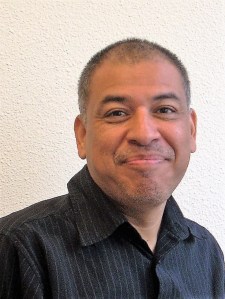
 Obed Medina is the director of the absurdist comedy, “Seven Dreams of Falling,” by C. Scott Wilkerson, now playing through September at the Collaborative Theatre Project in Medford. The play is a re-imagining of the Icarus myth. The premise of the play is that Icarus (the young Greek fellow who flew way too close to the sun) is now being forced, by his mythological family, to repeat his humiliation over and over, throughout time.
Icaris and the other characters (Daedalus, Theasus, Ariadne, and the Minotaur) are cursed, trapped into promoting and acting out the catastrophe as a yearly ritual, similar to Christmas. The characters desperately try to exploit the event (each to their own advantage) to imprison each other, and to escape. It’s a powerful play. I met Medina at the Collaborative Theatre to talk about “Seven Dreams of Falling.”
OM: It’s a relatively new play. It premiered in 2013 at the Hollywood Fringe Festival. I visualize a lot of lighting, sound, playing with shadows and light — coordinating together silhouettes. It’s the only way to tell the story and bring it to life, because it’s a Greek myth and has all these fantastical elements.
The text is very heady; it’s a thinking person’s play: there is a lot brewing underneath the text. The sound propels you forward and incites emotion. We have a lot of projections and video that will be used. We try to tell the story and bring it to life with the images: there’s interaction, rather than just dressing the set. We’re taking the conventions of theater and turning them on end.
Continue reading Bringing nightmarish ‘Seven Dreams’ to life
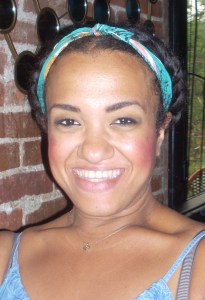 Oregon Shakespeare Festival actor Lauren Modica, appears in “Henry IV, Part One” and “Henry IV, Part Two,” where she portrays multiple roles including Peto, the gal pal of Falstaff and Price Hal. Next season she will be playing in “Romeo and Juliet” and “Sense and Sensibility.” Modica is from Portland, where she developed her extensive resume by performing in many of the remarkable theaters there. She was hired after she submitted a video audition to OSF.
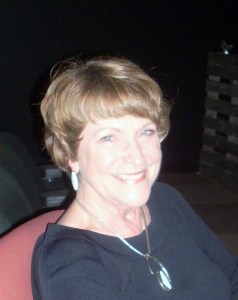 Pam Ward, of Medford’s Collaborative Theatre Project, is directing a series of live radio plays from the ’40s and ’50s called Radio Days. I recently saw “The Canterville Ghost,” an adaptation of Oscar Wilde’s classic tale, which has had many adaptations. This version, by Edwin Blum, took place during World War II, with locations moving from the English countryside, to the interior of an ancient castle, to the British front line in the height of battle with Nazi soldiers.
 The Collaborative Theater Project’s current musical, “Bonnie and Clyde” features Sabrina Hebert as Blanche Barrow. Hebert studied music at Southern Oregon University, and discovered her love of musical theater. I met with Hebert and CTP President Susan Aversa-Orrego at Boulevard Coffee in Ashland.
 Southern Oregon University Professor Eric Levin has been awarded a Fulbright scholarship. Levin will teach for the 2017-18 academic year at the University of Ireland in Galway and participate in the University’s International Eugene O’Neill Conference. I met with Levin in his office on the SOU Campus.
 Oregon Shakespeare Festival actor Michele Mais plays Mistress Quickly in “Henry IV, Part 1” and “Henry IV, Part 2.” Next season she will again be playing Mistress Quickly in “Henry V.” Mais, a veteran of Broadway, has also performed with the Cornerstone Theater Company. We met at Hearsay in Ashland.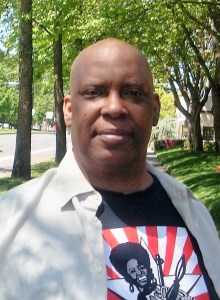
 Ashland Theatre