Category Archives: Interview

Backstage: Program notes aid in understanding, appreciating music

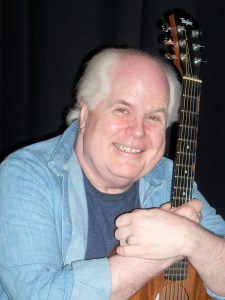
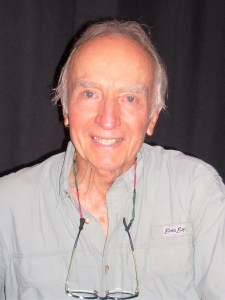
Ed Wight delivers pre-concert talks and writes program notes for the Ashland Chamber Music Concerts, the Oregon Repertory Singers, and the Rogue Valley Symphony (which now can be read on-line.) For a decade, Wight taught music history and music appreciation at Southern Oregon University. We visited over lunch at the Standing Stone Brewing Company.

EH: What does a piece of music have to have, to make it a great piece of music?

EW: Not much. Think of “Amazing Grace,” just a simple melody works. People have forgotten what arrangers do: You’ve heard this melody a hundred or a thousand times, but the arranger can change anything about it except the melody. You look for rich chords. A good arranger can change the chord, the mood, the tempo. I love to hear strings in pop music, let alone in classical music, backing simple melodies or simple themes. A theme is just a high-fluting musical history word for the melody.

Do you want slow, lyrical ballads? Do you want that powerful dramatic movement? So often, the best works will have both. That’s why symphonies and string quartets will have more than one movement; they give you different moods to respond to. And that’s what’s nice too: In a symphony, a string quartet, a piano trio, you’ve got three or four movements, each in a different mood. Who ever thought that up, did it right, long ago. That’s been with us since the Renaissance. They would have a fast dance and a slow dance on the same tune, or sometimes they would be different tunes, but they would pair dances of different moods. That’s when we started getting the concept of a single work having very different components. We’ve run with it ever since, thank goodness.

EH: How does one develop an understanding of classical music?

EW: Find things that you like and start moving out from there. That’s the trick. It’s tougher now because classical music has basically disappeared from media. It’s not part of the popular culture any more. The Chamber Music Series gets the world’s best string quartets, piano trios, piano soloists, and so on.

I try to ride two horses in the notes that I write, and the talks that I give, because I’m always conscious that there might be someone who doesn’t know much about classical music. I keep my language simple. I also want to surprise people who have heard Beethoven’s Fifth a hundred times — to find a little nugget, that maybe they don’t know about Beethoven that influenced that work.

If you really like a piece of music, and want to understand it, and start breaking it apart: “What chords does he use? How does he shape the melody? What’s the overall shape of the piece?” You are documenting an interest. You are documenting a love affair.Ed Wight
Ed Wight

https://pubads.g.doubleclick.net/gampad/adx?iu=/11564835/dailytidings.com&sz=1×1&t=pixel%3Dshareable&c=8616409717870.02&d_imp=1

A good director can say ‘I don’t know’

Actor Kate Mulligan of the Oregon Shakespeare Festival recently played Maria in “Twelfth Night.” Mulligan has been part of OSF’s

Kate Mulligan

acting ensemble for the past eight years. Before that, she worked in film, television and with an experimental theater, The Actor’s Gang, in Los Angeles. This is a second of a two-part column. The first part was published on Oct. 31.

EH: What do you value most in a director?

KM: I love a director who says, “I don’t know.” A director who thinks that they have it all figured out is not going to be a joy to collaborate with. Sometimes, anybody in a leadership position is afraid to admit that they don’t know what they’re doing. Somebody right in front of them might have the answer they’re looking for, if they just have the lack of ego to ask.

Kindness and great communication goes a long way. Then being a great leader saying, “We’ve shaped this. This is what we’re going to do. Do it again and again and again. Remember why you found this beat. Remember why we chose this moment to be the way it is,” so that you’re not recreating what you did yesterday, but re-finding it so you can make it new. Continue reading A good director can say ‘I don’t know’

Advice for an actor — Don’t show it, be it

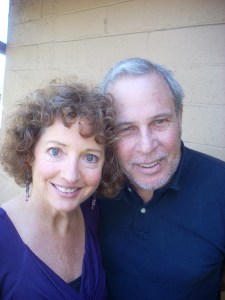
Kate Mulligan of the Oregon Shakespeare Festival will be playing Mrs. Potts in “Beauty and the Beast” next season. Mulligan, with her husband, Brent Hinkley, came to OSF from Los Angeles after longtime affiliations with Tim Robbins and The Actor’s Gang. I visited with Mulligan at Mix Bakeshop in Ashland. It is surprising that this trim, young, attractive woman is such an accomplished character actor. This is the first of a two-part column. The second will be published on Nov. 14.
EH: As an actor, what was your attraction to theater?

KM: I was drawn to the danger of live theater: You don’t get to stop and take another take; things go wrong all of the time, and, “How do you tap dance around it, to make sure that nobody sees all the disaster that’s occurring?”

Doors started opening, and I walked through all of them. I learned what I love, what I was good at, how I could improve, and to have great respect for all aspects of the job. I’ve learned how to take criticism well because I’ve gotten a lot of it. Continue reading Advice for an actor — Don’t show it, be it

Oregon Stage Works re-launches

Peter Alzado and Jessica Sage, as co-producing artistic directors, are re-launching Oregon Stage Works as the lead — and only — actors in a production of “Annapurna.” Directed by Liisa Ivary, the play opens Friday, Oct. 28, at Temple Emek Shalom in Ashland.
Oregon Stage Works, with Alzado as its artistic director, closed its doors in 2010 after six seasons in its charming black box theater on A Street in Ashland. Sometimes thought of as an off-Broadway theater, it produced plays ranging from Samuel Beckett’s “Waiting for Godot” to Charles Dickens’ “A Christmas Carol” and “The Great American Trailer Park Musical.”

While relying mainly on volunteer actors and crew, the theater focused on developing the actors and the text to stage creative and challenging theatrical works while providing the community with affordable high quality theater.

Alzado recently directed and performed in the highly acclaimed production of “Red” at Ashland Contemporary Theatre. Last spring, Sage directed Ashland High School’s winning production of “A Midsummer Night’s Dream.”

We met at the Rogue Valley Roasting Company Coffee House in Ashland. Continue reading Oregon Stage Works re-launches

Bringing theater to the people where they live

Bill Rauch

Before becoming Artistic Director of the Oregon Shakespeare Festival, Bill Rauch was the Artistic Director of Cornerstone Theater Company. Cornerstone is a multi-ethnic theater ensemble, based in Los Angeles, which produces new plays nationwide.

BR: We started Cornerstone because we heard that only 2 percent of the American people went to professional theater on a regular basis. We thought, “Even if we’re lucky enough to be successful in the professional theater, we’ll have only performed for 2 percent of our fellow citizens. That’s not good enough.”

We went to isolated rural communities and put on plays with the people who live there, because we could learn more about what interested people, and re-invent theater from the ground up. We would move to very small towns, anywhere from 200 to 2,000 people — Towns that would make Ashland look like a giant metropolis.

We would usually adapt a classic play, and set it in the community that we were working with. It was incredible work; it was life-changing for all of us who were part of it. We did that work on the road, in small towns, for five years. Continue reading Bringing theater to the people where they live

First thing: Take care of the audience

Bill Rauch

Bill Rauch, Oregon Shakespeare Festival’s artistic director, acted and directed theater throughout his childhood and academic career. Rauch became an Artistic Director of Cornerstone Theater Company in his early 20s, which he guided for 20 years, while also directing for theaters including South Coast Repertory, Yale Repertory Theatre and OSF, before becoming OSF’s Artistic Director in 2007. This is the first of a two-part column.

BR: Libby Appel, my predecessor, was really generous with me. For five years in a row, she invited me in to work in all three theaters, to do all different kinds of work, so when I applied for the job, I knew the organization, the town and the audience, and was able to speak about them with some passion.

EH: Any surprises when you got here?

BR: I was surprised how supportive the audience was. For instance, I felt that OSF’s incredible company of actors could put their own stamp on musicals, from the wonderful way that they interpret stories. When we did “The Music Man” in 2009, we thought, “This is a Shakespeare-loving audience, and they may turn up their noses at a classic American musical.” The fact that all the musicals we’ve done have been so embraced by the audience was delightful. Continue reading First thing: Take care of the audience

The scoop on ‘Spoon River’

Director-actor Ron Danko and musician-music Historian David Gordon have formed The Madrone Theatre Company to produce a new adaptation of the “Spoon River Anthology,” opening Oct. 7 in the Rogue Community College Performance Hall in Medford.

Published in 1915, Edgar Lee Masters “Spoon River Anthology” portrayed small town rural America through poetic portraits of numerous characters who somehow spoke from beyond the grave. Danko pulled 50 out of 240 vignettes and invited David Gordon to weave music into the production. I met Danko and Gordon one afternoon in Rogue Community College’s pristine black-box theater.

EH: How would you describe the “Spoon River Anthology”?

DG: It’s like a haiku or a miniature painting. It somehow condenses life down into its absolute minimal number of words or strokes. These are vignettes about life by people who are done with living. They don’t have to put on pretenses or lie any more. They can be totally honest about their successes and their failures. They admit their failures. To me, the mastery of it is that (sometimes in just a few dozen words) each one creates this little reality that has emotion in it.

RD: A full characterization. Continue reading The scoop on ‘Spoon River’

Ashland is the place for Theatre