Benjamin Bonenfant plays Pip in “Great Expectations,” now playing at the Oregon Shakespeare Festival. This is his first season at OSF. Recently, Bonenfant was Prince Hal in Colorado Shakespeare Festival’s productions of “Henry IV: Parts 1 and 2″ and King Henry in “Henry V.” This is the second in a two-part column; the first was published on Aug. 8, 2016.
EH: How does theater relate to politics and society?
BB: Right now, in our political arena, there is an on-going theater of the grotesque that is really unsettling. We see revolutions, fascism and these regime-toppling ideas being tossed around, rather than any sort of discourse between two moderate sides. It’s horrifying. It feels like a spectacle.
How theater relates to social issues? There’s a lot to be said for what theater can accomplish and how it can be relevant. I love the diversity and inclusion initiative in this company. For example: There is a preexisting narrative that the world of Dickensian London was a predominantly white place. That is part of a false narrative. There were people of color all over England in Dickens’ time. We have a production of “Great Expectations” that is very diverse. We introduce a diverse world of Dickens to the minds of people who didn’t know there was one. We also reflect more authentically a cross-section of the human experience. It broadens the capability of this story to apply to everybody. This is the kind of narrative we need in this country. Continue reading Theater can serve church-like life role→
Benjamin Bonenfant plays Pip in Charles Dickens’ “Great Expectations,” now playing at the Oregon Shakespeare Festival. Bonenfant came from the Colorado Shakespeare Festival where he played such roles as Henry V in “Henry V,” Prince Hal in “Henry IV” Parts 1 and 2, and Ferdinand in “The Tempest.” We visited over iced coffee at Mix. (This is the first part of a two-part column. The second will be published Aug. 22.)
EH: How do you approach a role?
BB: It’s different for every role, for instance, doing a Shakespeare versus doing an adaptation of a novel. A Shakespeare play has all the necessary information in the lines. The time, place, what’s happening in the world, the way people feel, and the qualities of the characters, all of that information, you get by studying the text of the play. You look for every reference to your character from all of the other characters. Shakespeare gives it all to you, so you get the fullest picture. It’s all in the words. Continue reading Translating ‘Great Expectations’ from page to stage→
Penny Metropulos directed and co-adapted (with Linda Alper) “Great Expectations” by Charles Dickens, now playing at Oregon Shakespeare Festival. Other OSF adaptations to her credit are: “The Three Musketeers,” “Tracy’s Tiger” and a musical version of “Comedy of Errors.” Metropulos originally came to OSF as an actor and singer in 1985. After three seasons, she turned to directing.
EH: Did directing come naturally to you?
PM: I went to a training program at the London Academy of Music and Dramatic Arts. It was about collaboration. It wasn’t the “dog-eat-dog” kind of thing. I came back with this holy grail of “company,” and that never left me. The idea of being in a theater company has always been with me. And I have been lucky enough to do that.
Because of my background as an actress, I had done a lot of classical, contemporary and musical work. Right away, I was doing all different kinds of things. I guess it was right because the work kept coming. I took every job because I needed to learn how to do this. It was great. I knew it was right.
I started singing so early in my life, that singing was always second nature to me. That’s what directing felt like. It was like breathing, like singing. It was the right thing for me. At the end of my acting career, I realized that I never wanted to leave the rehearsal hall — the process was what was interesting. Continue reading OSF’s ‘Great Expectations’ director shares story behind the story→
Pianist Martin Majkut will perform with flautist Katheryn McElrath in concert at Grizzly Peak Winery on July 16 and 17. In a recent conversation, Majkut, Rogue Valley Symphony’s music director, gave me some insights into the development of classical music.
MM: In general, I am convinced that we are moving away from music that was very academic. Music of the second half of the 20th century often consisted of composers in ivory towers disrespecting accessibility, and thinking, “If you’re not good enough to understand my art, then I don’t want you,” which is such a silly proposition.
All of the great composers wrote with people in mind. Otherwise, the music is dead, it’s on paper. We need the audience to complete the circle. Without them, we’re lost.
I see a trend in music that is deep and meaningful, but at the same time, accessible. It gives you a full range of emotions, not just freaky and dark, but also with elation and romance. We’re going back to an era where all these things are embraced in their totality, not just: “Let’s just wallow in despair and sadness.” Continue reading It’s OK to get lost listening to classical music→
Scott Kelly plays the Gravedigger in “Hamlet,” now playing at the Oregon Shakespeare Festival. But there’s something else: Throughout nearly all of the play, looking up from the audience toward the Elizabethan Theatre’s “heavens,” you see Kelly, an enigmatic figure, surrounded by musical instruments and bathed in a deep-red light. Kelly’s music provides a psychological resonance for Hamlet’s inner monologues with an occasional duet with Hamlet on electric guitar. I saw the first preview, and the undercurrent of music intensifies the emotional impact of the language.
Before joining the cast of “Hamlet,” Kelly spent eight years as an OSF sound technician. A gifted musician, Kelly often tours internationally with his heavy metal band, Neurosis.
EH: When did you know you wanted to be a performing artist?
SK: I was focused on music at a young age. I was driven by it. I started out playing music mainly inspired by punk rock. That was how I learned. It was the kind of music where your emotion mattered more than your skill level, at the onset. If you felt it, you could get up and do it. I slowly learned. I taught myself how to play through the course of that, through touring, and being exposed to the world and other musicians. My initial influences were bands like Black Flag and Black Sabbath and early Pink Floyd. Then I came across Miles Davis and Hank Williams and more obscure underground stuff, noise music, and avant-garde music. I like some hip-hop music. I like Wagner, Prokofiev; I like the heavy classical stuff, anything that moves me. I like emotion-driven music. I don’t like cookie-cutter stuff. I’ve got to feel it in the words or the music. It could be (the poet) Charles Bukowski, to me he’s very musical. I just need to feel it. Continue reading ‘Hamlet’ music maker and grave digger→
Ashley D. Kelley plays Dorothy in Oregon Shakespeare Festival’s “The Wiz” opening June 18 in the Allen Elizabethan Theatre. The daughter of a Baptist minister, Kelley developed her musical abilities singing in the choir. She graduated from Temple University with a major in theater and has been working ever since. In the last eight years she played upwards of 30 roles in regional theaters. We met at Mix Bakeshop in Ashland.
EH: When did you know that you wanted to act?
AK: Since I was able to talk — ever since I was a little kid, I was always performing in front of people. My parents would have friends over, and I would always be the center of attention.
EH: Tell me about your lifestyle as a performer.
AK: A lot of traveling, a lot of new places, a lot of new faces, which is awesome. You’re always meeting new people, working with new directors, new choreographers. So there’s that bit of excitement. It can be a little tiring, picking up your life and moving from place to place. I love it; I’m always hungry for more. Continue reading A conversation with Ashley Kelley, who plays Dorothy in OSF’s ‘The Wiz’→
Desdemona Chiang is directing “The Winter’s Tale” opening June 19 on the Elizabethan Stage at The Oregon Shakespeare Festival. Born in Taiwan and raised in Southern California, Chiang “fell into” the Dramatic Arts Department at UC Berkeley as stress relief from her pre-medical studies. Then she decided medicine wasn’t her path. We met at Mix.
DC: It was spiritually hard to pursue the sciences in a way that a good doctor has to: to be able to look at someone and treat them as a patient, not as a person. I had a hard time looking at suffering, and having to turn myself off to it, in order to do my job well. Lack of compassion made me feel bad as a person. I’m too sentimental. I know that great doctors are able to be compassionate, have great bedside manner, and at the same time tell you, “I’m sorry, you have stage-four cancer.” I didn’t know how to do that.
I mucked around in Silicon Valley, for a while designing websites and programming. It was cool, innovative, creative and cutting edge. But it didn’t make me happy. We weren’t asking the humanistic questions, the big life questions that we ask in theater around: “Why?” and “What does this all mean?”
And then I decided I wanted to do theater professionally. I was looking at Berkeley Rep, ACT, at The Magic Theatre, and I thought, “There is a world in which people can do this as a job, and not the fringe thing.” I decided grad school was the way to go. I went to The University of Washington at Seattle. Jon Jory (the acclaimed director) was there at the time. He was my mentor for three years. A lot of my approach to rehearsal and to actors has a lot to do with his influence.
EH: Tell me about the world of the play.
DC: We’re taking a note from the original Shakespeare impulse. We’re making our own fairy tale based on certain cultural inspirations from Dynastic China and the Old West, set historically. It’s timeless in the way that, “Once upon a time there was a jealous king.” We place fairy tales in a time. We know they exist out of our time, but we don’t know in what time they do exist.
EH: There is an Oracle in the play?
DC: The Oracle is present in the play, but is not tangible material. You have to believe what you can’t see. There is so much in the play about seeing and not seeing. Once you see something, you have certainty. Once you’re certain of something, what’s the need for faith? That’s what’s so dangerous in religion now. Some say, “We’re certain of this.” Faith is in the space of certainty. That’s where that bridge is to get across. That’s where faith is necessary, “I don’t know but I believe, I hope and I believe.” For me, faith and certainty are opposites.
EH: Is this play tragicomedy?
DC: It’s one of Shakespeare’s Romances. “Cymbeline,” “Pericles,” “The Winter’s Tale” and “The Tempest” are the big four Romances where you start seeing magic. You see magic in “Macbeth,” but that is more of the occult. Here you have resurrection happening: People die and come back. You have the intervention of the Divine. You have playing with time. Nowhere else, in his other plays, does he jump time and generations.
There’s a lot of study around what it means for Shakespeare to be writing these Romances in the later years: That’s to be more spiritual, more existential.
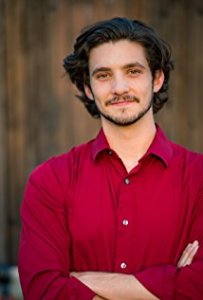 Benjamin Bonenfant plays Pip in “Great Expectations,” now playing at the Oregon Shakespeare Festival. This is his first season at OSF. Recently, Bonenfant was Prince Hal in Colorado Shakespeare Festival’s productions of “Henry IV: Parts 1 and 2″ and King Henry in “Henry V.” This is the second in a two-part column; the first was published on Aug. 8, 2016.


 Ashland Theatre