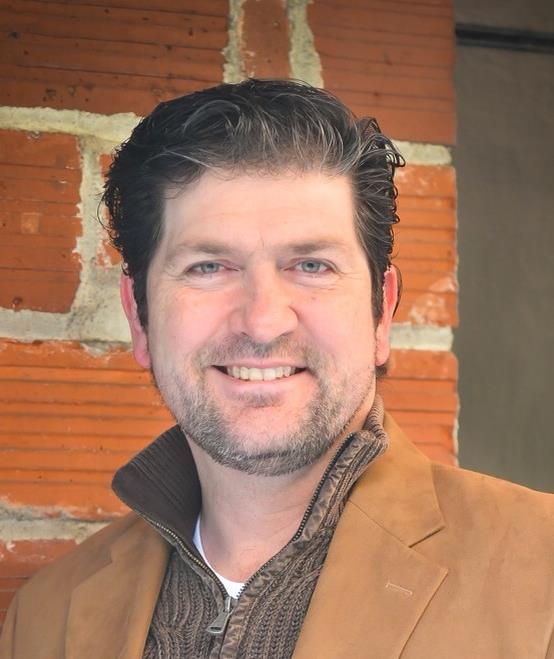
Jim Edmondson, who is directing the “The Cyrano Project” at Southern Oregon University, is an associate artist at the Oregon Shakespeare Festival, where he has been an actor and director for 38 seasons. We met one afternoon in the Center Square Theatre at Southern Oregon University.
EH: When did you discover that you wanted to do theater?
JE: It was about the time I was a junior in high school, as so many people do. I had always been a pretty imaginative kid. It just was clearly where I was happiest. We hear a lot of people say, “I found my tribe,” but I really did. They laughed at the same things I did; they accepted everybody. It seemed a good match.
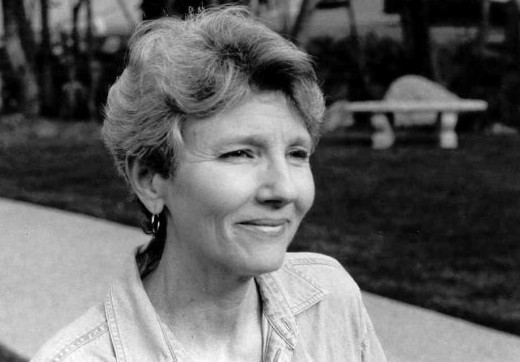
Peggy Rubin is the director of “Pompadour,” a new play by Molly Best Tinsley now playing with Ashland Contemporary Theatre. The one-woman show stars Jeannine Grizzard, ACT’s artistic director. Peggy and I visited in her lovely Ashland home.
EH: You came here with the Oregon Shakespeare Festival?
PR: Yes, I was an actor here for three summers. In 1957, the Oregon Shakespeare Festival was already a legend for people who love Shakespeare, partly because Angus Bowmer was such a glorious human being. He loved having people around who were equally skilled and some more so, in certain ways.
Ashland playwright Molly B. Tinsley’s “Pompadour” will premier Saturday, Jan. 19, with Ashland Contemporary Theatre. Peggy Rubin directs, and Jeannine Grizzard plays the titled mistress of King Louis XV of France. Molly and I met at Bloomsbury Coffee.
EH: What was the inspiration for “Pompadour”?
MT: There was an exhibit at the Portland Art Museum called “La volupte du gout (taste of the voluptuous): French Painting in the Age of Madame de Pompadour.” I went through it three times. I was fascinated by the overripe, color-saturated, complacently allegorical imagery.
Robin Downward’s Randall Theatre has been producing plays at a breathtaking rate while attracting an untapped audience through a pay-what-you-want policy. Downward also is a gifted actor, performing in his own productions and at other venues such as the Oregon Cabaret Theatre, where he sang and danced as Sherlock Holmes in “Holmes and Watson Save the Empire” and in Cole Porter’s “Let’s Misbehave.” Downward also teaches an acting workshop called Character Creation. We visited at the Randall Theatre in Medford.
EH: What do you cover in your Character Creation class?
RD: A lot of what I do in the Character Creation class, drama therapists do from the standpoint of analyzing yourself as a person, and turning things that you have experienced into positive emotions.
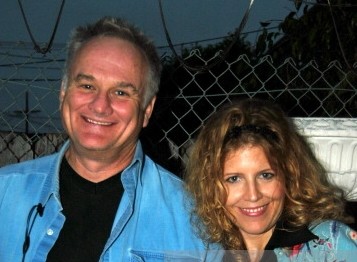
Leo Gorcey Jr. and his wife, Krista, are producing a film based on Leo’s book, “Me and the Dead End Kid.” The book chronicles Leo Gorcey Sr.’s theater and film career, the Gorceys’ unique family relationship, and the dramatic events leading to the original Broadway production of Sidney Kingsley’s “Dead End.”
The film is in development with plans to shoot in the Rogue Valley. I visited the Gorceys in their attractive Ashland home.
Shae Johnson is now starring as Suzy in Oregon Cabaret Theatre’s “Winter Wonderettes.” Johnson studied opera at the San Francisco Conservatory of Music after graduating from Ashland High School. Returning to Ashland, she performed in the Oregon Shakespeare Festival’s “The Music Man” and in OCT’s “The Marvelous Wonderettes.” She played Debbie Reynolds in Oregon Cabaret Theatre’s “What a Glorious Feeling.” Johnson is now the lead singer of the Rogue Suspects. We met for coffee at Mix Sweet Shop in Ashland.
SJ: I love live theater; I love being in front of an audience, which is very different from being in front of a camera. A camera just stares at you without any emotion. With an audience, it’s very in the moment; every show is different, because you have a different audience every night.
The goal of the actor is to be able to communicate to the audience, to make them feel what you’re feeling and have them relate to what you’re feeling on stage. You can see it. Sometimes when you look out into the audience, you can see when there’s someone in particular who is understanding what you’re doing. As long as there is just one person in the audience who is really loving it, that’s enough for me.
Peter Quince played Roger Sherman in “1776” last summer at the Camelot Theatre. He later played Charlie in David Ives’ “Mere Mortals” at Ashland Contemporary Theatre. Now Quince is launching his own musical comedy, collaborating with composer David Gabriel, called “Divine Lunacy.” Quince and I met at Noble Coffee.
EH: You’re working on a new musical?
PQ: “Divine Lunacy” was done as a sketch comedy review in 2006 with two sold-out performances at the Black Swan Theatre. It was wildly and enthusiastically received. People thought it was both hilarious and thought-provoking. It deals with the whole notion of the line between divine inspiration and out-and-out lunacy. As any artist probably knows, you may cross that line over and over again. If you come back, it’s OK. If you stay across that line, it could be a problem, and you have to be locked-up, or at least helped in some way.
Where is the line? How easy is it to cross? What’s the role of the artist in society? Many prominent artists in the last decade have been praised and lionized. Artists are encouraged to let themselves go over that line. Suddenly they have gone over the line, and they’re really troubled. “Divine Lunacy” talks about all of that in the context of a strong, heartwarming and funny show.
Mental illness has become extraordinarily prevalent. There are some estimates that one out of four people, at some point in their lives, are on psychiatric medication. It’s a huge issue in our society, but it’s not often dealt with openly, and certainly not with comedy and music, which is a gentler way to open people’s hearts and minds, making them feel and think, by making them laugh and care. “Divine Lunacy” shows what it’s like to be in the midst of crises or bouts of incredible creativity.
When is it, the divine spark? And when is it the infernal fire? It starts the same way, and it looks the same. We need that divine spark. We need to make it come to life, but it can consume as well as it can illuminate.




 Ashland Theatre