Category Archives: Interview

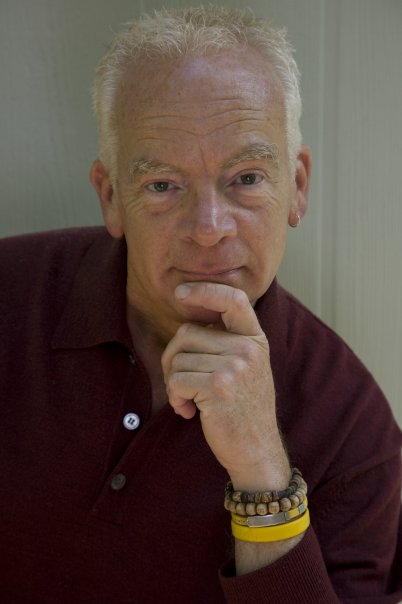
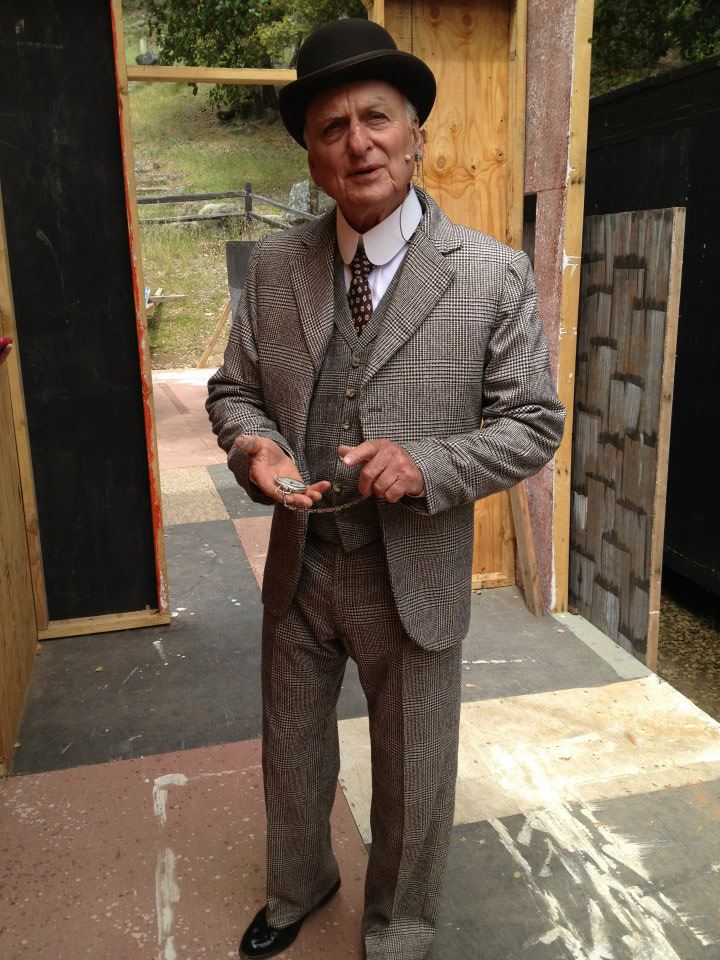
Michael Hume, OSF actor

"The minute you feel cozy and secure, you get complacent, you stop doing your work, and they'll start to see habits or mannerisms." — Michael Hume
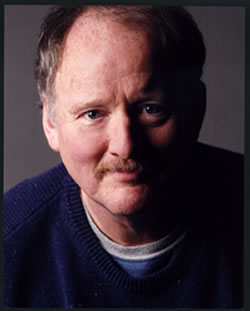
Michael J. Hume
Michael J. Hume

EH: I saw you in “Clay Cart.” You look nothing like you looked then.

MH: I had a shaved head and I had a little thingy up there.

EH: That’s why I didn’t recognize you. Do you consider yourself a director or an actor?

MH: I’m an actor who directs every now and then. There was a period back in New York where directing gigs came along fast and furiously, so I didn’t act for about two years. I would like to say that all of those directing jobs made me rich, but they didn’t, not in this business. Nobody gets wealthy in the theater. And then, going back to acting: I could feel the scales of rust falling off. But ultimately it’s like getting back on a bicycle. A couple of weeks in the rehearsal hall and you’re fine again.
Continue reading Michael Hume, OSF actor

Mike Halderman

"When the actors do a good job, they put pressure on me to equal them, and I put pressure on them to equal my work. That's what makes it fun." — Mike Halderman

EH: How did you become a technical director? Isn’t your degree in music?

MH: I have a teaching credential in music from Sacramento State University. I taught for a while and then I got involved in community theater.

EH: So then you went to SOU to the undergraduate program?

MH: Yes, in 1990. My wife was a teacher and I had kids in high school. I went to Southern Oregon University (SOC at the time) to be an actor. I was doing some technical theater classes, and I said, “I’m really good at this.” I decided that I could graduate in two years because I already had a degree, and I didn’t have to do any of the undergraduate pre-requisites. I took lighting, sound, and scene design, theater business management, costuming, makeup — I did a painting internship at OSF one semester. I graduated with a BFA in scene design.

Continue reading Mike Halderman

The dangers of acting

"Every actor wants to be as authentic as possible." — Ian Swift
Ian Swift
Ian Swift

EH: Acting can be dangerous?

IS: Physical things happen to you that can be quite painful. I’ve had two instances, and I hope they were my last. They were both Shakespeare plays.

I broke my nose (of course inadvertently) on stage. That was during a very volatile and vigorous, production of “Julius Caesar.” I was Julius Caesar. In my assassination scene all the actors came up, simulated daggers and very slowly thrust their fists into me. Then, “Et tu Brute? Then fall, Caesar!” And I would fall. It was tricky to die on stage. I always tried different ways in rehearsal, and I finally pretty much had it down. But the other thing I was consumed with was blood being authentic. Every actor wants to be as authentic as possible. I tried different things, a bloody rag, blood pellets, nothing really worked. I gave up.

Continue reading The dangers of acting

Theater: A team effort

"There is no safety net and you are out there on the wire." - Ian Swift
Ian Swift
Ian Swift

Evalyn Hansen: What is it that is unique about theater?

Ian Swift: I think it’s something you don’t do by yourself; it’s something that you have to involve others in. Even if you are doing a one-man show, you still have a producer, a light crew, sound, whatever. It’s a team effort. It’s unique in that respect. It is a team sport. With painting, composing, writing — it’s a solo thing.

What goes into theater is extraordinary. You come together to do a play, and it’s like a bunch of folks put on an elevator. And the elevator gets stuck. And you are with these human beings for a very intense period of time, for five or six weeks of rehearsal. You see them almost on a daily basis. Theater also calls for putting yourself in a vulnerable position. Otherwise I don’t think it makes for a good actor.

Continue reading Theater: A team effort

Cabaret’s Mark Barsekian

"Maybe it's the schizophrenic in us all that just wants to be everybody all of the time." — Mark Barsekian
Mark Barsekian
Mark Barsekian

EH: So you’re basically an actor?

MB: I love to explore life through the characters I perform. Acting is my retreat. It’s when I don’t have to be me. Maybe it’s the schizophrenic in us all that just wants to be everybody all of the time. Any life that I want to live, I can, just by picking up a script, and doing the homework and dedicating my self to a character and to an author, and being true to what I see: in life and in the text. Because we portray life, we are communicating lives to our audiences, people that they know or will never know. That is one of the gifts of acting.

Continue reading Cabaret’s Mark Barsekian

Doug Ham of Ashland High School

"The theater journey's been great." — Doug Ham

Doug Ham
Doug Ham

Over coffee and root beer at Bloomsbury Coffee House, Doug Ham described the theatrical team experience.

EH: Theater is life-giving, in a way, isn’t it?

DH: The first show I was ever in was during the height of the Vietnam War. People were afraid of being drafted. I was a mess. At the end of the show this couple came up to me and said it was so cool for two hours to come into the theater and to be able to laugh out loud and to and forget about all that is going on outside. I thought, “Well this is what I need to be doing.” It can be an escape and it can be a teacher.

Continue reading Doug Ham of Ashland High School

OSW’s Peter Alzado

"There is a truth to theater that you may not see out on the street." — Peter Alzado
Peter Alzado
Peter Alzado

As we sat in the darkened theater on a sunny day, Peter expanded on his vision of theater and the release of the soul.

EH: You have two plays coming up in the next season: “Golden Boy” by Clifford Odets and “Glen Garry Glen Ross” by David Mamet. What attracted you to present those plays?

PA: Both plays deal with the downside of the American economic system. I’m all there with free enterprise, but I think, taken as far as it can go, it becomes cannibalism, and we are seeing that now. There needs to be free market but there also needs to be a recognition that we’re all human and we need to treat each other in a fashion that respects that money is not the end of everything: the be-all and end-all. That’s what has brought us to the place we are now.

Continue reading OSW’s Peter Alzado