Judith-Marie Bergan: Part Two

Judith-Marie Bergan
Judith-Marie Bergan

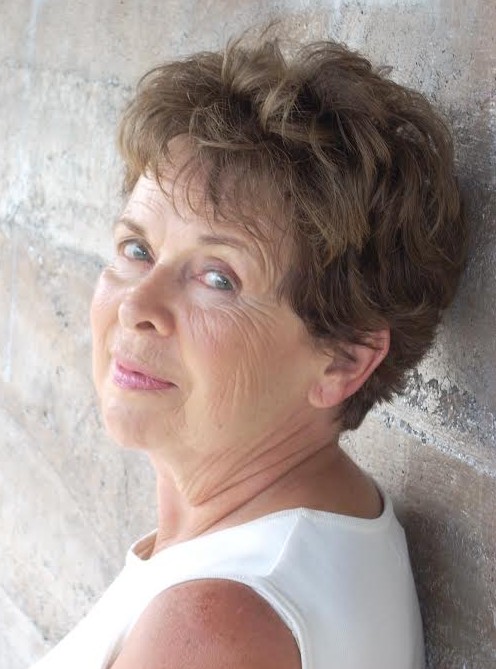
Oregon Shakespeare Festival actress Judith-Marie Bergan has brilliantly portrayed numerous iconic characters, including Cleopatra in Shakespeare’s “Anthony and Cleopatra” and Lyubov Ranevskaya in Chekhov’s “The Cherry Orchard.” But the role that has had audiences reeling is her stunning and haunting portrayal of the acerbic, drug-addicted Violet, the destructive matriarch of the overtly dysfunctional Weston family in Tracy Letts’ “August: Osage County.” Bergan and I met over coffee one summer afternoon. This is the first of a two-part interview; the second will publish in this space on Oct. 10.

EH: How did the role of Violet affect you?

JMB: I did warn my husband, “I don’t know what mood I’m going to be in this particular year.” But as it turned out, I didn’t carry it home. I was concerned because you are digging into some really deep, weird, dark, hard places. You conjure up stuff that you usually keep buried in yourself. I guess I must have gotten it out all on stage. When you’re doing a role like that, you think about it all of the time. The challenge of the actor is to go deeper and keep within what is directed.

Continue reading Judith-Marie Bergan: Part Two

Levity Improv Comedy

Levity Improv Comedy delighted a hefty audience last month with its premier production of improvisational theater under the trees at the Grizzly Peak Winery in Ashland. I visited with director Lyda Woods and troupe members Cynthia Rogan, Mig Windows and Jeffrey Hayes, and we reminisced about the exuberant evening.

LW: I really like improv because it teaches me to be a better person. Some of the guidelines are: You’re trying to say “yes” as often as you can. And it’s important to be openhearted, to be kindhearted, to be lighthearted, to be really available and supportive of your teammates, and really in the moment. And those are all things I’d like to be in my life. The other thing is that it encourages me to fail big. When I do improv, I’m always trying to get myself to take the risk, and that means risking failure.

Continue reading Levity Improv Comedy

Peter Wickliffe

Peter Wickliffe
Peter Wickliffe

Peter Wickliffe portrays the young Woody Guthrie in the Camelot Theatre’s production of “Woody Guthrie’s American Song,” a musical tribute to a consummate American artist. Peter and I sat down one afternoon to chat about performing musical theater and about his next project, which is to direct his own adaptation of “Dracula” at the Randall Theatre in Medford.

PW: I love to sing. There’s so much that can be learned from songs and singing. Deeper messages sometimes are conveyed through song.

While I’m on stage, I’m having a good time with the people on stage and with the audience. Even in shows where you’re not acknowledging the audience, you can still feel them, when they’re with you, when they’re following along, when you’re breaking their heart, when you’re making them laugh. You can feel that you’re entertaining them.

Things will happen, things will go wrong, things will get mixed up; somebody will drop a line, but you’re all in it together. You’ve got to roll with the punches, and you’ve got to figure out how to keep things going forward, keep creating that story, and stay on the same flow, without getting flustered and letting it affect your performance or what you’re ultimately there to do: entertain.

Whenever I’m on stage, I’m not thinking about anything that is related to my life, or the hardships I’m going through, or the work that I have to do, or any of that. There is such a connection with the audience, your troubles just melt away, and you’re just there together.

Continue reading Peter Wickliffe

Tami Marston

Tami Marston
Tami Marston

The Camelot Theatre Company’s current production of “Woody Guthrie’s American Song” is a profound evening of music and theater. Tami Marston, along with the rest of the outstanding cast, makes the delivery of Peter Glazer’s exuberant and complex script and score seem effortless. Marston and I met for lunch at The Grotto in Talent to talk about Woody Guthrie’s legacy.

EH: What makes Woody Guthrie unique among folk singers?

TM: Woody never wrote about himself. He was a voice for the disenfranchised. When he made music, it was either to make them feel better or to give voice to what they were feeling and were too angry, or too sad, or too scared to say. He wanted to write songs that made people feel empowered and that they were worth something, that their lives had meaning. His perceptions were so acute. They were simple songs, they were honest, and he captured people’s emotions. Woody charted a new course as a troubadour.

He used familiar melodies, folk songs of the oral tradition and of unknown authorships. The oral tradition of music in America came from the Pilgrims, from old English ballads and work songs from the days of slavery. They were easy to sing and they captured people’s emotions. He wrote his own words. They are simple songs but the words are honest and real. He was a very modest man. He really did feel that he was just being a mirror to other people. That seemed to be his function in life.

There’s a passage that Woody wrote, “There’s a feeling in music, and it takes you back down the road you have traveled, and it makes you travel it again.”

If it had not been for Woody Guthrie, there would not have been the folk music revival of the 1960s. He was chronicling his times as he was traveling with his instrument among the people. He ended up in New York, in the place where there was a bohemian presence. And people became aware of his music even though it was not prevalent yet. What happened with the folk boom was people were picking up songs of Woody’s and the groups he played with. Those were the roots of the folk music revival. He was a unique man in a unique time. He was a true troubadour, a balladeer. He was a real man of the rails who managed to end up in an urban center and have an influence.

Continue reading Tami Marston

Once In A Blue Moon

When Wanda, Jim’s hot but shady ex-high school sweetheart, shows up for an extended stay, hilarious mayhem ensues that rocks his stable marriage. “Wanda’s Visit”, by Christopher Durang is the main feature of “Once in a Blue Moon”, three short plays by established playwrights presented by Ashland Contemporary Theatre. All three plays range from witty to poingnant to absurdly hysterical.

Directed by Evalyn Hansen, the cast includes: Lyda Woods, Maria Ciamaichelo, Daureen Collodel, Eric Epstein, Joe Suste, Jesse Lawson, and Christopher Morton.

Tickets are $12 and can be purchased at Paddington Station in
Ashland and Grocery Outlet in Medford or on line at http://www.ashlandcontemporarytheatre.org

Wanda's Visit

Helena de Crespo

Helena de Crespo
Helena de Crespo

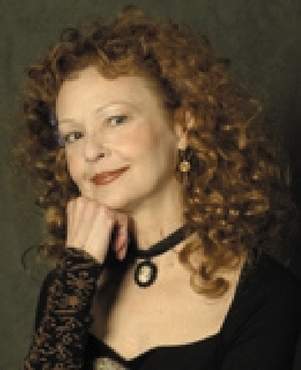
Portland actress Helena de Crespo was in Ashland recently to give a one-woman, one-night performance of “Elective Affinities” by playwright David Adjmi. You may remember de Crespo’s performance in the title role of “Shirley Valentine” at Oregon Stage Works in 2009.

De Crespo is performing “Elective Affinities” on tour as a fundraiser for SaveWorldArt, a Portland-based charity that fosters support for indigenous art forms threatened with extinction. On this evening, de Crespo was raising money specifically for Bassac Theatre in Northwest Cambodia.

“Elective Affinities” is a site-specific play meant to be performed in a large home for about 30 invited guests. This evening was hosted by Maurine and Stanley Mazor at their Chateau Herbe.

Guests entered through a lovely garden, then drifted into a large and well-appointed room where they were served refreshments. Then Mrs. Hauptmann (de Crespo) entered to “visit” with her “guests.”

Highly coiffed and stylishly dressed, the charming Mrs. Hauptmann chatted away, gradually revealing her elitist world view. She told her guests she had selected them for preferential treatment, and that they had been spared the inhuman treatment foisted upon the rest of the human race (such as torture), about which she had no opinion. They were safe with her, she said.

It was a pleasing evening with a very pointed message. De Crespo and I visited a few hours before her performance.

Continue reading Helena de Crespo

Alonzo Moore

Alonzo Lee Moore
Alonzo Lee Moore

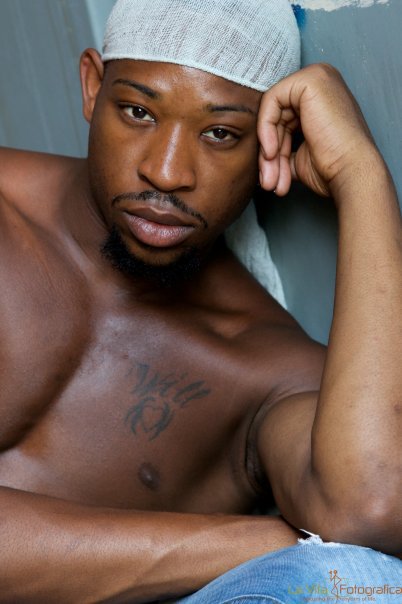
Ashland Contemporary Theater currently features Alonzo Moore in Terrence McNally’s It’s Only a Play. A principle dancer with Dancing People Company, Moore is also an actor and choreographer with the Oregon Shakespeare Festival. Next season, he will be dividing his time between Ashland and his home town in Texas, where he plans to build a community art center. We chatted over Sunday brunch at Larks.

AM: I live in a very rich area in Texas, where the culture and the heritage runs deep. The families have been there together since the 1840s. It used to be cornfields, open land, and cattle. Now it’s all subdivisions and strip malls. The economy is booming down there. It’s all urban.

Continue reading Alonzo Moore

Ashland is the place for Theatre