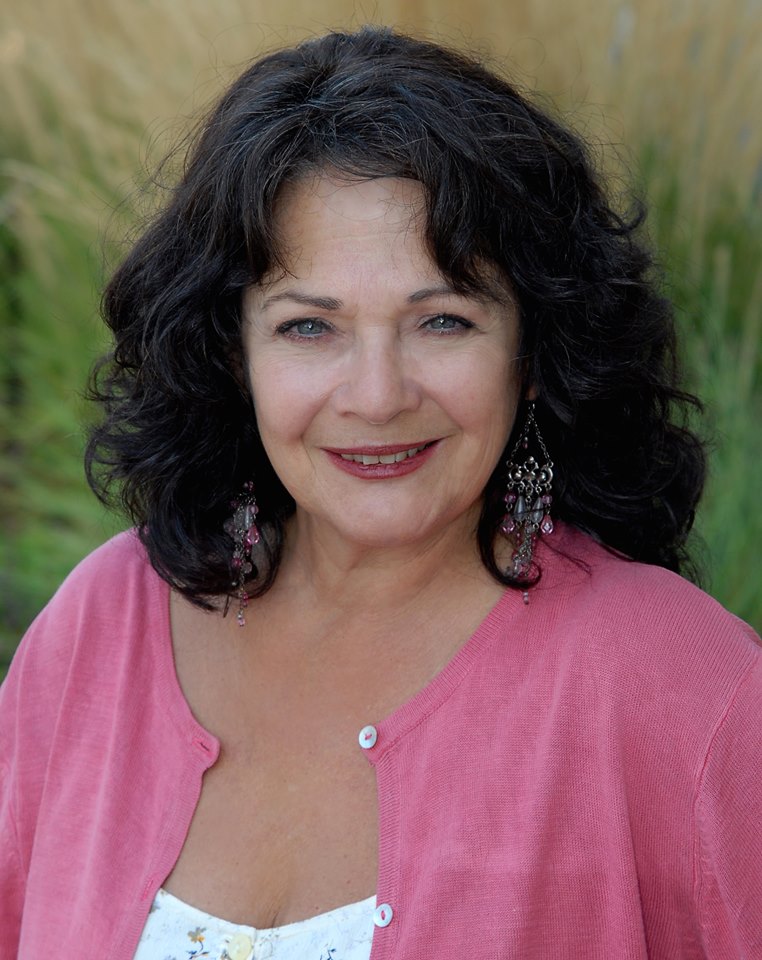
Camelot Theatre’s Artistic Director, Livia Genise, is directing “All The King’s Men”, which opens Friday, February 3rd, at Camelot’s newly constructed theater in Talent. After building the new Camelot Theatre facility, in addition to her daily routine of acting, directing, and producing, Genise seemed remarkably rested and resilient. We chatted over coffee at Starbucks near Southern Oregon University one sunny afternoon.
LG: I’m doing what I think I was supposed to do with my life; and when you do that, you’re happy.
EH: Did you always know that you wanted to be an actress?
LG: I always knew what I wanted. But my focus shifted from wanting to be a star (which I think was more about low self-esteem) to wanting to make a difference. When I was given a George Bernard Shaw quote that said: “This is the true joy in life –being used for a purpose, recognized by yourself as a mighty one,” it changed my life. My life then became more about service.
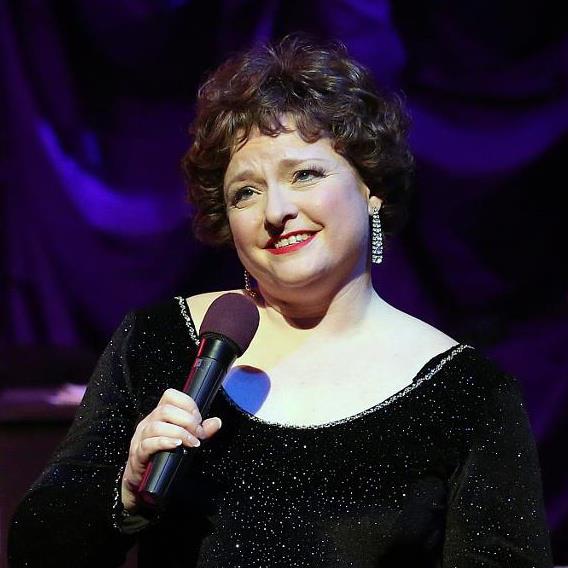
After seeing Oregon Cabaret Theatre’s Cabaret Christmas, I was determined to interview Kymberli Colbourne, a delightful comedic actress, director, and cabaret artist. We lunched at Dragonfly in Ashland.
EH: How did you create Cabaret Christmas?
KC: We went into development in May of last year. There was a lot of research and blood, sweat, and tears. That’s the thing about creativity. Creativity is about chaos and risk.
EH: What draws you to perform on stage?
KC: I love the immediacy of the relationship between myself, the playwright, the actors, and the audience. There’s no other place where that happens in that way. For me the true meaning of theater is ensemble. I consider the audience part of that ensemble because it’s the energy that they bring that completes what we do.
The playwright gives us a skeleton. In rehearsals we put the flesh on that skeleton. Then every night we have to breathe the life into our characters in each moment. What the audience brings is the final piece of the relationship; that makes that world real, because they buy into it, and they take the journey with us.
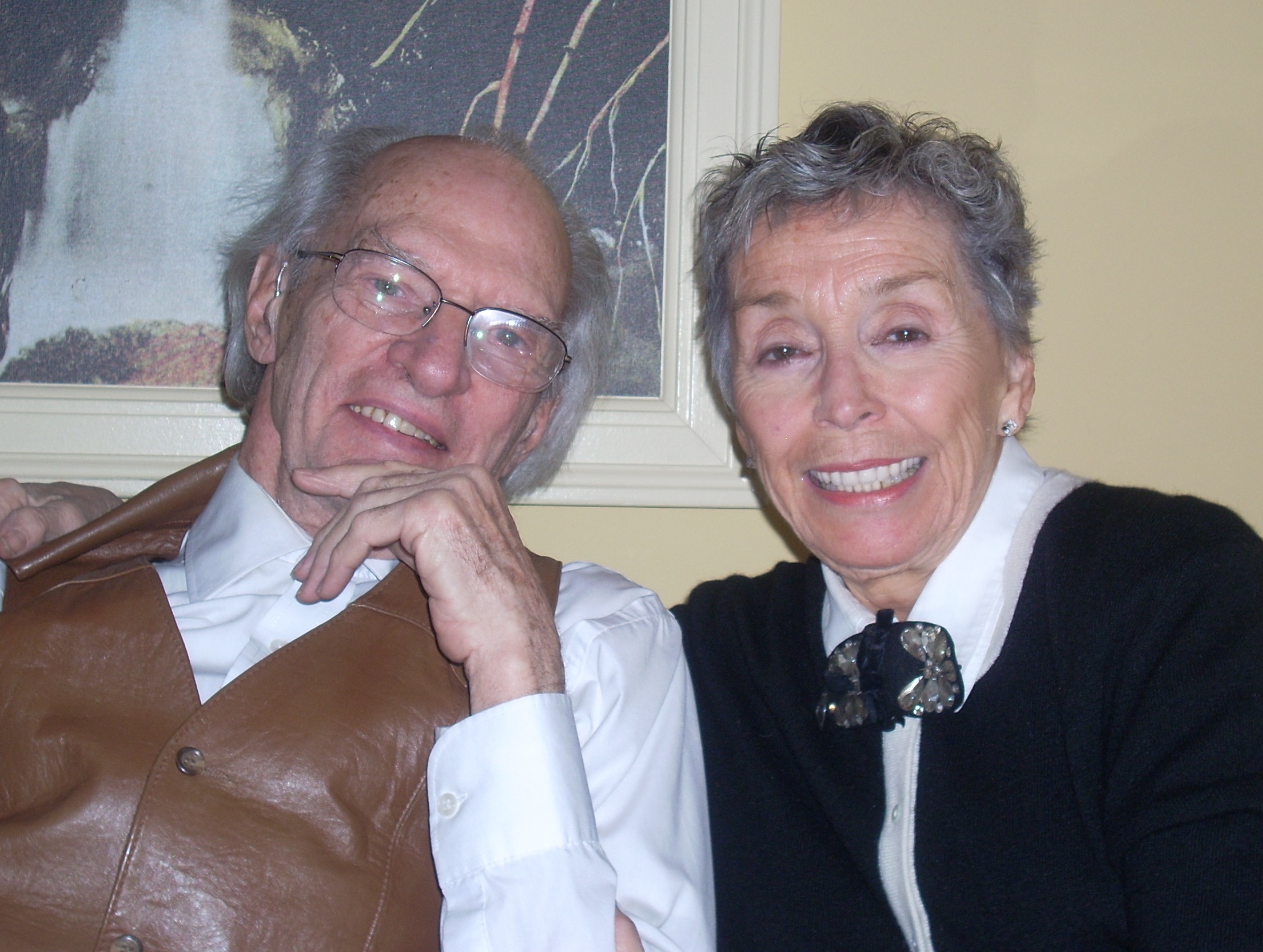
Dee Maaske and her husband Paul Roland have both enjoyed long and successful acting careers. Their work in theater has taken them throughout the world. They now make their home in Ashland, where Maaske has performed numerous roles for twenty seasons at the Oregon Shakespeare Festival. We visited over a scrumptious lunch at Larks.
EH: Is there a favorite role that you would like to play?
DM: I would like to find a really fine new play that explores the feminist movement. We need to remember what that was all about. To my knowledge, nobody’s written about the feminists of the 1970s, and they should. Gloria Steinem and Bella Abzug had to fight so hard. These women really took a lot of abuse as they opened doors for young women to become architects, doctors, engineers, and heads of corporations. It wasn’t just about burning your bra. All movements are about something much deeper than that, something that hits the core of a population: hence the Occupy Movement today.
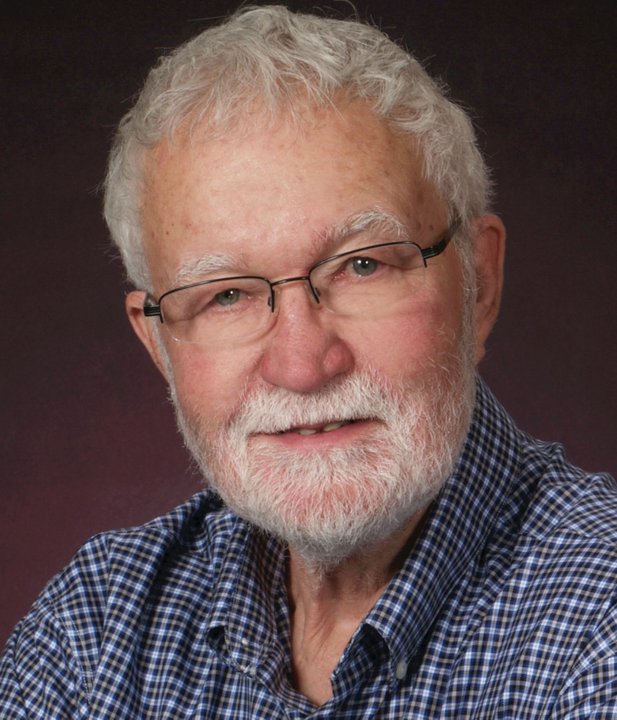
Playwright Bert Anderson conducts the Atelier, the popular Playwright Actor Workshop that provides a free venue for dramatic readings of new plays by local playwrights in Ashland. An Episcopal minister and retired marriage and family counselor, Anderson began writing plays in 2005 while attending local writing workshops. We met at Boulevard Coffee one bright winter afternoon to talk about the Atelier and his most recent play, “Mr. Brightside and the Bonfire Nights.”
EH: Your play had so many bizarre incidents and characters; where did they come from?
BA: Some of it comes from the fact that I was a therapist in a residential treatment program where I met a lot of boys who were mentally disturbed, delinquent kinds of kids. The idea for the play came from a New York Times article that describes the boys from Texas who had burned twenty churches. These boys have good people as parents. There was a lot of detail about family, but not about the boys’ motivation. It all came together in my right brain and put it down on paper. The play is totally fictional.
There’s this very vulnerable age that seems to be repeated over and over again, of nineteen to twenty year old kids: The Texas tower shooting, the Columbine shooting…It’s a very vulnerable age. The main character in my play is a damaged human being. I put in possible things that could have damaged him. The play is about his emotional arc.
This play has nine different characters, and you carry all of those characters in your head as you’re writing the play: all of their personalities, all of their quirks, and hopefully all of the arcs that they’re going to make in the play. It’s an amazing process.
EH: You’ve created this marvelous forum for playwrights, the Atelier.
BA: I belong to the Ashland Playwrights’ Project, and I kept hearing people say, “When we write a play there’s no place to hear it”. There just wasn’t a forum.
EH: Where does the name come from?
BA: It’s simply French for workshop. There are all kinds of workshops. In our country the word is implied with an artistic idea.
We want plays by local playwrights. And we want fresh material. Some people in this community can open a file drawer and pull out plays from the ‘50s. Basically we’ll take any full length or full one-act play that is current that is fresh for the writer. It can be a monologue. We prefer not having screenplays because they don’t read well; there’s too much description and not enough dialogue.
EH: Why do you write plays?
BA: It’s a creative outlet that’s always been missing in my life. I got very interested in the right brain thing. It’s a fulfillment of my own need to be creative.
EH: Why do you like to write plays rather than memoirs or novels?
BA: I think a novel has a lot more latitude. There’s so much emotional dynamic in a play. One of the ways that I judge the plays that I see is: “How much energy is coming off the stage from the actors? Am I waiting for something to happen, or am I sitting on the edge of my seat?” It’s that energy that you write into a play. There’s a discipline to it: getting the message across in a limited amount of time. You really create life with a play.
The Playwright Actor Atelier brings together Rogue Valley writers and actors to read and analyze new plays written by local writers. Readings take place the last Monday of each month in the Gresham Room of the Ashland Library. For information contact: http://playwrightsatelier.org.
Evalyn Hansen is a writer and director living in Ashland. She trained as an actor at the American Conservatory Theatre and is a founding member of San Francisco’s Magic Theatre. Reach her at evalyn_robinson@yahoo.com.
Set Designer, Don Zastoupil, has created a guillotine for The Scarlett Pimpernel, currently playing at The Camelot Theatre. With a background in interior decoration and an interest in cinematography, Zastoupil began designing and constructing stage sets when he was a Board Member at the Opera House in Woodland, California.
One afternoon, we visited in Camelot’s newly constructed playhouse as he was finishing the set for The Scarlet Pimpernel which takes place during the French Revolution. Individual scenes depict a prison, the Bastille, an estate, a library, a schooner, a drawing room, a garden, a ballroom, a café, a cave hideaway, the inside of a carriage, and a seacoast.
Alonzo Lee Moore is a principal dancer with Dancing People Company and an actor and choreographer with the Oregon Shakespeare Festival. You can see him this week and next as Gus, the coat-checker-wannabe-actor in “It’s Only a Play,” a Terrence McNally piece I directed for the Ashland Contemporary Theatre.
Next season, Moore will be dividing his time between Ashland and his hometown in Texas, where he plans to build a community art center. We chatted over Sunday brunch at Larks Home Kitchen Cuisine in downtown Ashland.
AM: I live in a very rich area in Texas, where the culture and the heritage runs deep. The families have been there together since the 1840s. It used to be cornfields, open land and cattle. Now it’s all subdivisions and strip malls. The economy is booming down there. It’s all urban.
Within our community and within our society we’ve advanced as a people. We’ve had the civil rights movement and we’ve had all of these amazing opportunities to grow, succeed and achieve equal rights; but in doing so, I feel that we’ve lost what was driving us to strive for those things.
What’s being lost is all of the values that we grew up with, all the songs, the holidays, and the stories that we used to know. I feel that I need to go back home and preserve some of that. How else would I preserve it? I sing; I’m a dancer and an actor. Why don’t I go back and use the crafts that I have learned and enrich the youth in my community and weave the fabric back again?
Shakespeare scholar Michael P. Jensen has taught the Bard’s work at Southern Oregon University, lectured at the Oregon Shakespeare Festival and published dozens of essays, articles and materials for television and radio. He recently met me online to give his views about the feature film “Anonymous.” The film discredits William Shakespeare as a playwright, and presents a contentious chronicle of the Elizabethan era.
MPJ: The film “Anonymous” is about to lower the world’s I.Q. about the authorship matter. It claims that Edward de Vere, the Earl of Oxford, was the author of William Shakespeare’s plays.
EH: Why do people doubt Shakespeare’s authorship?
MPJ: This was hard for me to explain until Sarah Palin made her visit to Old North Church, the Paul Revere church. When questioned by reporters, she repeated history as best she remembered. She mangled it because she did not really know the subject, yet spoke as if she did. Those who doubt Shakespeare’s authorship do exactly this. They mangle the facts, yet speak as if they know what they are talking about.
They say that Shakespeare could not have written his plays without a university education. They say that Shakespeare’s will does not mention his books; therefore he did not have books, and maybe could not read. It is true that Shakespeare did not attend a university, and books are not mentioned in his will. But other playwrights of his time did not attend university; and most extant playwrights’ wills do not mention books. If these are proof that Shakespeare was not a writer, then it is proof that the others were not either. It’s absurd.
Doubters make up these fake problems because they don’t know how to do this kind of scholarship. You don’t look at Shakespeare and find a problem. When you study all the playwrights you find there is no problem. Shakespeare is pretty typical. Doubters probably are not smart enough to know they should investigate it this way.
Instead, they try to find Edward de Vere’s biography in Shakespeare’s plays (which is unreliable). Hamlet was captured by pirates, and so was Edward de Vere. Baptista, in “The Taming of the Shrew,” has two daughters. So did Shakespeare. Dozens of people have been proposed as the true author, on the basis of biography. This is a dead-end approach.
All documentary evidence affirms that Shakespeare wrote his plays and poems. No evidence supports anyone else. Edward de Vere’s fans rationalize problems caused by his death in 1604. “The Tempest” could not have been written before 1610 because it paraphrases a letter, written in July of that year, by William Strachey about a shipwreck; it uses other sources from that time.
Computer analysis of linguistic tendencies reveals Edward de Vere as a very bad match for the author of Shakespeare’s plays. Facts do not seem to matter to these true believers. There is a superb Shakespeare authorship website by David Kathman and Terry Ross that will answer most questions:http://shakespeareauthorship.com.


 Ashland Theatre