Tag Archives: Actor

Community actors balance day jobs, stage life

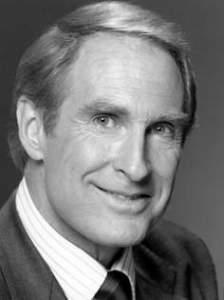
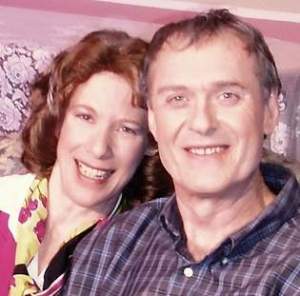
Judith Rosen and Don Matthews

Judith Rosen and Don Matthews recently performed together in a charming production of Neil Simon’s “Same Time Next Year” at the Randall Theatre in Medford. Both actors have played in numerous productions at theaters throughout the Rogue Valley. Both actors have successful full-time careers. Matthews is classical music director and host at Jefferson Public Radio and a voice instructor at Southern Oregon University. Rosen is development director of the Jackson County Sexual Assault Response Team and writer/dramaturg for the Oregon Shakespeare Festival. We met at Liquid Assets in Ashland. This is a first of a two-part column.

EH: Were you in theater before you came to Ashland?

JR: As a child, yes. People often come from one of two directions. They’re the constant exhibitionists and performers or, as I was, excruciatingly shy. So I could hide in a role and do things I could never do (as myself) in public. As you mature a bit, you realize that you can’t hide in a role. Continue reading Community actors balance day jobs, stage life
Clive Rosengren

Clive Rosengren
Clive Rosengren

Actor/author Clive Rosengren recently recorded his two mystery novels, “Red Desert” and “Murder Unscripted,” with Blackstone Audiobooks here in Ashland. The novels feature luscious language, compelling plots and a charismatic private eye who sleuths in the world of show business. Rosengren’s acting career, which spanned 40 years on stage, screen and television, provides in-depth research into the fascinating world portrayed in his books. We met one afternoon at the Rogue Valley Roasting Company in Ashland.

EH: What do you look for in a director?

CR: The most interesting experiences I’ve had in doing stage work were with directors. Some can be extremely creative. Some can be extremely tyrannical. I don’t think that a director that has everything plotted-out leaves a lot of room for creativity. It can’t be one-sided. There has to be collaboration. There’s got to be a symbiotic relationship between actor and director. Continue reading Clive Rosengren

Jesai Jayhmes

Jesai Jayhmes
Jesai Jayhmes

Jesai Jayhmes recently performed with Jeannine Grizzard, Diane Nichols and Peter Alzado in Ashland Contemporary Theatre’s dramatic reading of Jane Anderson’s “The Quality of Life.” Jayhmes came to Ashland in August to attend Jean Houston’s Social Artistry training and decided to stay. We chatted over curry at the Namaste Café across from Lithia Park. This is the first in a two-part interview.

JJ:. My experience of Ashland is continually surprising in that the quality of artistic literacy of the population is very high.

EH: How have you made your way in the field of theater?

JJ: One of my passions is training groups. For years, I trained people in acting, improvisation and classical theatre. That translated into something more professionally lucrative which is training people, outside of theater, in their effective communication skills. Those are the ones who will actually value it and pay for it. I’ve worked with a lot of people from all different professions that need to get up and talk about anything. That’s really fun, but I like making shows much better. Continue reading Jesai Jayhmes

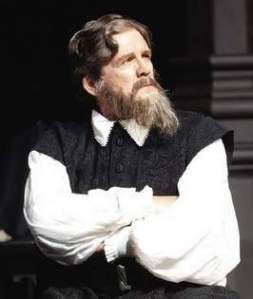
Anthony Heald

Anthony Heald as Shylock

Actor Anthony Heald has spent nine seasons at the Oregon Shakespeare Festival, playing such iconic roles as Shylock in “The Merchant of Venice,” Doolittle in “My Fair Lady” and the Stage Manager in “Our Town.” This year, he plays the Narrator and Mysterious Stranger in “Into the Woods” and the Duke of Buckingham in “Richard III.” We chatted at Noble Coffee. This is the first in a two-part Backstage column.

EH: When you get a part, how do you attack the character?

AH: It depends on whether it’s a new play or if it’s a classic. If it’s a new play, I try to stay as open as possible, to get a sense of what the character is, realizing that in the process of rehearsing, there are going to be a lot of changes. I try to stay open to the changes, and think in terms of what would help the character or the project.
If it’s a classic, I like to learn all the lines long before rehearsals begin. I like to research previous productions, the time period in which the play was written, critical opinions of the play, to see what great minds have done in looking at the play: what they consider pitfalls, and what they think the main themes are, so that when we start rehearsals, I have some ideas.
Continue reading Anthony Heald

Jon Cypher

John Cypher
John Cypher

Actor Jon Cypher’s early acting career includes starring on Broadway as Prince Charming with Julie Andrews in “Cinderella” and playing Don Quixote in “Man of La Mancha.” His numerous films and television roles led to 10 years as Chief Fletcher Daniels on “Hill Street Blues.” One afternoon at Boulevard Coffee, we chatted about his 47-year career. This is the first in a two-column Backstage interview.
EH: You’ve done a lot of television, but what is the attraction to theater?
JC: That’s where the passion is. In the theater, the curtain goes up, you’re on stage, and you’ve got to do it. I got to play Thomas Jefferson on Broadway in a musical called “1776.” Out there, there were 2,000 people, and there’s that interaction of that audience. In a movie, you don’t have that. It can be great, great interaction with you and the other actor, a great scene together — it’s wonderful: “Oh my god, I forgot the camera was there.” But there are no people.
It’s being at risk. There’s really no present risk in film today. If something goes wrong, usually the director, will say, “Cut, no problem, let’s go back to one.” In movies or television, when the director says “Print,” 60 people turn around, walk away, and don’t care about you all. You think, “God, I never have to say those lines again.” What a difference. Continue reading Jon Cypher

Denis Arndt

Denis Arndt
Denis Arndt

Actor Denis Arndt is currently starring as Prospero in “The Tempest” and playing three supporting roles in “The Great Society” at the Oregon Shakespeare Festival. Arndt has had a long and prosperous stage, film and television career. We visited over a scrumptious brunch at the Greenleaf Restaurant in Ashland. This is the first of a two-part Backstage column.

DA: I think that almost all theater should be approached as an athletic event. I think that there’s a physicality to it. Aside from the fact that you have to have some basic chops, you have to speak clearly. You need to know how to breathe, no less than a singer has to know how to breathe, especially in Shakespeare. We used to have contests to see who could actually hold a breath and sustain meaning through seventeen lines of iambic pentameter. Not many people could do it. You start thinking of yourself as a bagpipe, this huge bag that you have to keep filled, and of course that takes a certain kind of commitment. That’s just the technical part of it. There’s also very much of a “spiritual” aspect to it. Theater is a human act, a collective human act.

Continue reading Denis Arndt

Christopher George Patterson

Christopher George Patterson

Christopher George Patterson stars in “Ain’t Misbehavin’,” featuring the music of Thomas “Fats” Waller and directed by Jim Giancarlo and choreographed by Giancarlo and Patterson. It’s playing at the Oregon Cabaret Theatre until Aug 31. Patterson and I chatted one afternoon over tea and lemonade at the Standing Stone Brewing Co. in Ashland. This is the first of a two-part interview.

CGP: The interesting thing about “Ain’t Misbehavin'” is that it tells the story through the tapestry of the Harlem Renaissance without digging in too deeply.

EH: What’s your process of choreographing a show?

CGP: I’ll read the script to see what’s supposed to happen. I usually listen to the music over, and over, and over again, and let it talk to me. The music tells you what to do and how to get there through telling the story through the dance. If you know what the story is, all you have to do is fill in the gaps with the steps. It’s almost like playing in an orchestra: The score is there, but you create the dynamics, and that’s what makes people want to engage in watching it.

Continue reading Christopher George Patterson