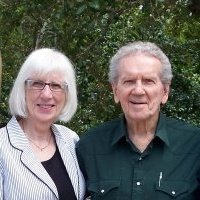
In 1922, Grant Shepard was “bitten by the theater bug” at the age of six. He went on to earn a Bachelors Degree in Theatre Arts and a Masters Degree in Cinematography from the University of California Los Angeles. He taught at the University of Miami and California State University at Los Angeles. Shepard has acted and directed theater in the Rogue Valley for over twenty years.
EH: Why are some people so passionate about theater?
GS: The theater-going public (which prefers live theater to cinema) is apparently hungry for the immediacy of the relationship with the persons and things that happen on-stage as opposed to shadows on the screen.
EH: What makes a great play?
GS: It depends on the viewpoint. From the audience’s standpoint, a great play is one that pulls people in over a long period of time. From the performers’ standpoint, a great play is one that has parts that are challenging and fun to do. From the critical standpoint, it would be a play that is attention absorbing, gives entertainment, and looked back-on as having been worthwhile. It either has some kind of a message, thought provoking situation, or character development.
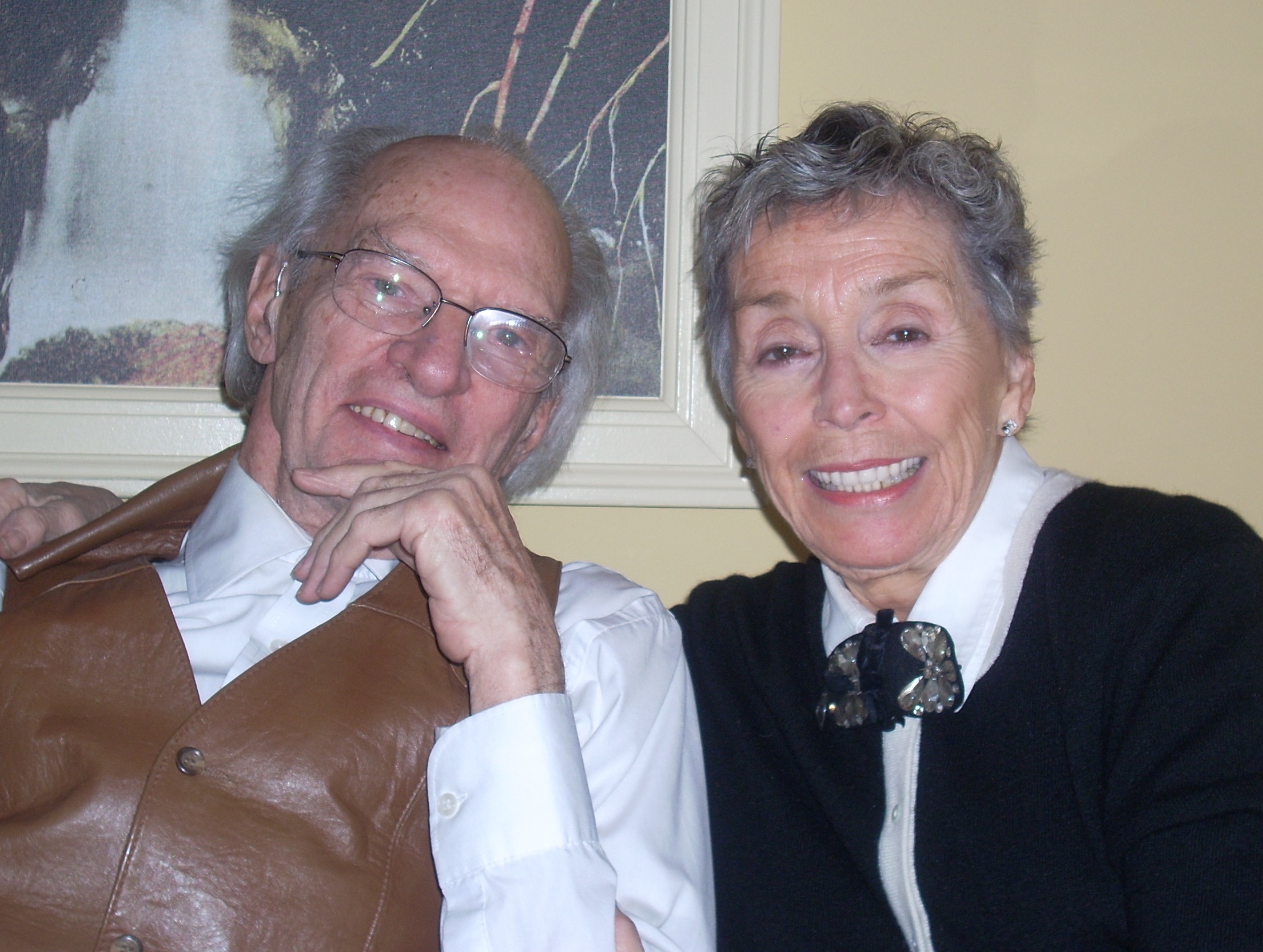
Dee Maaske and her husband Paul Roland have both enjoyed long and successful acting careers. Their work in theater has taken them throughout the world. They now make their home in Ashland, where Maaske has performed numerous roles for twenty seasons at the Oregon Shakespeare Festival. We visited over a scrumptious lunch at Larks.
EH: Is there a favorite role that you would like to play?
DM: I would like to find a really fine new play that explores the feminist movement. We need to remember what that was all about. To my knowledge, nobody’s written about the feminists of the 1970s, and they should. Gloria Steinem and Bella Abzug had to fight so hard. These women really took a lot of abuse as they opened doors for young women to become architects, doctors, engineers, and heads of corporations. It wasn’t just about burning your bra. All movements are about something much deeper than that, something that hits the core of a population: hence the Occupy Movement today.
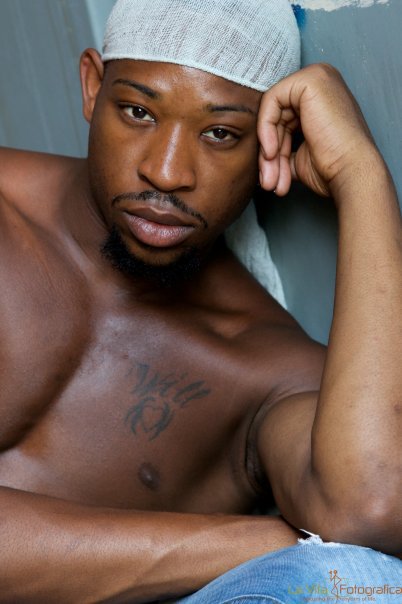
Alonzo Lee Moore is a principal dancer with Dancing People Company and an actor and choreographer with the Oregon Shakespeare Festival. You can see him this week and next as Gus, the coat-checker-wannabe-actor in “It’s Only a Play,” a Terrence McNally piece I directed for the Ashland Contemporary Theatre.
Next season, Moore will be dividing his time between Ashland and his hometown in Texas, where he plans to build a community art center. We chatted over Sunday brunch at Larks Home Kitchen Cuisine in downtown Ashland.
AM: I live in a very rich area in Texas, where the culture and the heritage runs deep. The families have been there together since the 1840s. It used to be cornfields, open land and cattle. Now it’s all subdivisions and strip malls. The economy is booming down there. It’s all urban.
Within our community and within our society we’ve advanced as a people. We’ve had the civil rights movement and we’ve had all of these amazing opportunities to grow, succeed and achieve equal rights; but in doing so, I feel that we’ve lost what was driving us to strive for those things.
What’s being lost is all of the values that we grew up with, all the songs, the holidays, and the stories that we used to know. I feel that I need to go back home and preserve some of that. How else would I preserve it? I sing; I’m a dancer and an actor. Why don’t I go back and use the crafts that I have learned and enrich the youth in my community and weave the fabric back again?
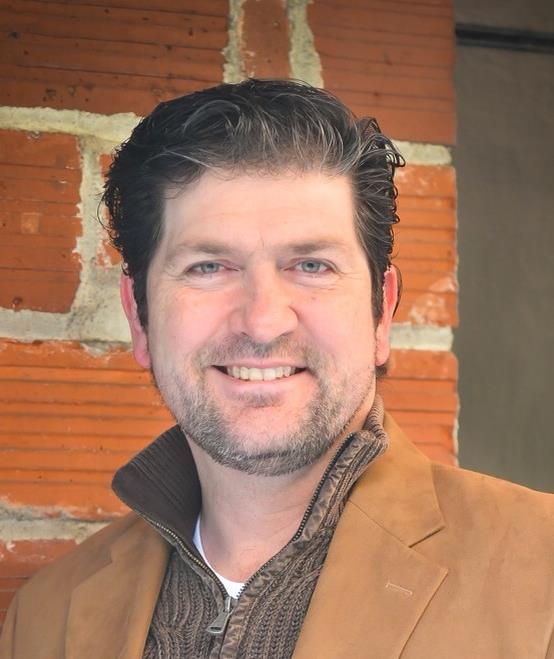
Greg Younger’s visionary play “Just Cause” was given a dramatic reading last month at the Ashland Playwrights Actors Atelier, a monthly workshop that allows local playwrights to hear their work. It was received by a delighted audience. Even though acting has been Younger’s primary career for decades, he considers himself first and foremost a playwright. We chatted on the terrace of the Nom Yen bubble tea house on Siskiyou Boulevard one sunny afternoon.
GY: I read recently that every playwright should have a group of people; that’s definitely the case, you need one. I’m very fortunate for the Atelier reading, although performance is a different animal altogether.
EH: Why are some of us passionate about theater?
GY: It’s the creative spirit. There’s very little banality in it; and it’s exciting. That’s why I’m there, to create, to get invested. I’m not putting on product. I’m putting on something that will move people in one way or another.
The Greeks understood that the stage was the window of the soul. To examine one’s humanity, and relationships, and what that’s all about, is one of the greatest reasons that we’re here. I find it the most grounding thing ever.
Theater allowed me to examine parts of myself I never would have been able to do in any other venue. I certainly couldn’t do it in any of the zillion jobs that I’ve had to support it. Going to the depths of your soul and screaming from there: Delight. There is just a joy that I feel when I’m present and alive on stage which is unequaled anywhere else. The same is why I write theater.
Theater is about spatial relationships. When you see the actors in person, there is a dynamic; the distance between them speaks. That is something that you cannot put on the page. So it takes a very astute reader of plays to know what a good play looks like, rather than a talking drama. I advise every single playwright to get on the stage and do a show.
Paramount is the play. The play is more than the script; it’s more than the actors; it’s more than the director; it’s all those together. It’s give-and-take. It’s very much a communal process. There’s a saying, “When you enter the rehearsal hall, leave your hat at the door.” It’s not about you. It’s about the play; it’s about what we’re creating. Leave everything behind.
EH: What makes a great actor?
GY: Versatility, openness, humility; the mind of a psychologist or a psychiatrist, somebody who is actually interested in the human condition, interested in other people, and curious.
For me, the ultimate actor is the Lawrence Olivier type, who stretches his boundaries, who can do anything.
The ability to witness: put awareness above and back of yourself. The ability to inhabit a world, inhabit it in front of other people and respect what that fourth wall is all about.
EH: The imaginary world?
GY: When you’re on stage, it’s not imaginary. It’s more real than this world is. It’s more profound, it’s deeper, certainly, and it smacks of poetry, the best kind of poetry. It’s not: “I’m just pretending on stage.” No way. Acting is being. What is essential for great acting is that you understand that: This is heightened reality. You’re in the thick of it, and it’s a beautiful thing. But it’s not pretending.
The Ashland Playwrights Actors Atelier brings together Rogue Valley writers and actors to read and analyze new plays. Readings take place the last Monday of each month. The next scheduled reading will be 6:30 p.m. Aug. 29 in the Gresham Room of the Ashland library with “The Angel Capone” by David Copelin. For more information, visit http://playwrightsatelier.org.
Peter Alzado (Oregon Stage Works’ former Artistic Director) is engaged in the creation of a new theater called the NEXT STAGE Repertory Company. One afternoon, we met at Medford’s Craterian Theater, where Alzado is currently in rehearsal for Lanford Wilson’s Pulitzer prize-winning play, “Talley’s Folly.” We then settled down with tea at nearby Grilla Bites.
EH: What makes a good director?
PA: I think great directors want an ordered world. They need to be able to have a real feeling for space, and how to communicate through space. They need to have an empathetic response to their actors. And they need to have a real sense of literature, and how to communicate those themes through the words that the writer has given them.
I’m not a big fan of, “Let’s do a concept.” I can see the value of it on occasion, but I’m much more aligned with getting out of the way and letting the material speak. If you find a way to allow the material to speak for itself the ideas that you have will enhance the material, and you’ll be dealing thematically with what the play is about. If you do that, I think you’ll have a real visceral impact depending on the writing and the themes. If you don’t do that, the impact and the audience response is intellectual and self-congratulatory. I sometimes find it off-putting. It’s like having somebody in an audience laugh at everything a friend does. I think that directing now is very much aligned to the technical aspects of the theater and less so to the acting.
After seeing Robin Downward’s extraordinary performance as Sherlock Holmes in Oregon Cabaret Theatre’s “Holmes & Watson Save the Empire,” I decided to check in with Downward and learn a little about his acting technique. We met at his own Randall Theatre in Medford as he was preparing for the opening of “Scots on the Rocks.” After a tour of the theater, we settled in his spacious and comfortable office.
EH: What is your vision for the Randall Theatre?
RD: The community of Medford needs a good, solid, community-based theater that serves the community through its outreach, not just within its doors. There is theater here; it’s just not accessible to the general public. One of my ideas is called “exterior theater,” theater that happens outside, in the parks or out in the streets. Theater has the opportunity to change people’s lives for the better, but it’s not going to do it if all that is happening is within the walls and the confines of the theater. It has to go into the community to be effective.
David Mannix plays Arthur Stein in Ashland Contemporary Theatre’s production of the comedy “End Days,” which opens Friday, April 29, at the Bellview Grange in Ashland. I had the pleasure of directing the production.
David and I visited one rainy afternoon as the props and set were being loaded into the newly reopened Grange building.
A former stockbroker and lawyer, Mannix is on the board and artistic committee for Barnstormers Theater in Grants Pass.
DM: Grants Pass has a surprisingly strong theater community. Barnstormers is the oldest continually operating community theater in the state of Oregon. It started in 1952. It is community theater. Nobody is making a living out of the theater, except for those doing all those unglamorous things such as bookkeeping. We do have several part-time paid employees or contractors. We don’t pick plays; we look for directors who want to pitch a play that they are in love with and want to do. I think it works pretty well.



 Ashland Theatre