Tag Archives: Actress

Jackie Apodaca

Jackie Apodaca
Jackie Apodaca

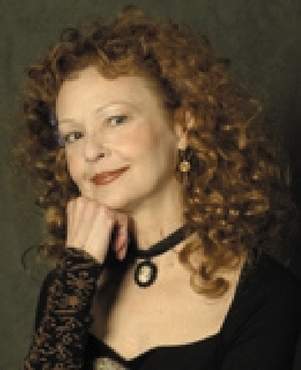
Actor, director and associate professor Jackie Apodaca directed Jose Rivera’s “Marisol,” which is playing this week at Southern Oregon University’s Center Stage Theatre. The production’s sensational staging, ensemble acting and stage movement blend bizarre and beautiful elements to create a compelling theatrical experience. Jackie and I met over breakfast at Greenleaf Restaurant in Ashland.

EH: What is unique about the theater experience?

JA: It is the live experience of it. Everyone is experiencing the exact same moment and will have the shared experience. There is something exciting about that fleeting and momentary experience. And you experience it as the actor, as the director, as the stage manager, as the run-crew, and as the audience. The experience is so close and intimate between the audience and the performers in that way.

Whereas in film, everyone experienced something, and then someone took it away, changed everything about it, and brought it back and showed you what it was. Film seems more intimate in that you see the actor’s face close up, but it has gone through so many processes before you got to see it. Did you really get to see what they did? Probably not.

I worked with filmmakers when I taught in the Film and Media Department at the University of California, Santa Barbara. I loved that, but film is completely the medium of the director and the editor. We would change the actor’s performance in the editing room. And we would talk about how we could make them seem to be doing different things. There is so much that can be controlled outside of the actor and outside of the moment. In post-production, the moment is gone and completely changed.
Continue reading Jackie Apodaca

Judith-Marie Bergan: Part One

Judith-Marie Bergan
Judith-Marie Bergan

Oregon Shakespeare Festival actor Judith-Marie Bergan has delighted audiences with her stunning portrayals of legendary characters in her 11 seasons with the festival. We sat down to chat over coffee one afternoon. This is the second column of a two-part interview. The first was published on Sept. 26.

EH: How did you become an actress?

JMB: When I was in grade school, I had a lisp and I was very shy. My mom took me to a speech therapist who said, “You know, it’s really basically shyness with Judith; maybe you should enter her into a dramatics class.” I happened to be going to a school with a huge drama department. I just took to it. I was a drama student in high school. I majored in drama in college. I transferred to Goodman Theatre in Chicago for the rest of my degree. It’s just something I always wanted to do.

What I felt was whereas I was shy in life, on stage I could be anything. I still feel that. I’m not as shy as I was, but I still feel that I would rather go out and do a show than speak in public. There are a lot of things that you can do that you can’t do in real life. That’s kind of the appeal.

Continue reading Judith-Marie Bergan: Part One

Judith-Marie Bergan: Part Two

Judith-Marie Bergan
Judith-Marie Bergan

Oregon Shakespeare Festival actress Judith-Marie Bergan has brilliantly portrayed numerous iconic characters, including Cleopatra in Shakespeare’s “Anthony and Cleopatra” and Lyubov Ranevskaya in Chekhov’s “The Cherry Orchard.” But the role that has had audiences reeling is her stunning and haunting portrayal of the acerbic, drug-addicted Violet, the destructive matriarch of the overtly dysfunctional Weston family in Tracy Letts’ “August: Osage County.” Bergan and I met over coffee one summer afternoon. This is the first of a two-part interview; the second will publish in this space on Oct. 10.

EH: How did the role of Violet affect you?

JMB: I did warn my husband, “I don’t know what mood I’m going to be in this particular year.” But as it turned out, I didn’t carry it home. I was concerned because you are digging into some really deep, weird, dark, hard places. You conjure up stuff that you usually keep buried in yourself. I guess I must have gotten it out all on stage. When you’re doing a role like that, you think about it all of the time. The challenge of the actor is to go deeper and keep within what is directed.

Continue reading Judith-Marie Bergan: Part Two

Tami Marston

Tami Marston
Tami Marston

The Camelot Theatre Company’s current production of “Woody Guthrie’s American Song” is a profound evening of music and theater. Tami Marston, along with the rest of the outstanding cast, makes the delivery of Peter Glazer’s exuberant and complex script and score seem effortless. Marston and I met for lunch at The Grotto in Talent to talk about Woody Guthrie’s legacy.

EH: What makes Woody Guthrie unique among folk singers?

TM: Woody never wrote about himself. He was a voice for the disenfranchised. When he made music, it was either to make them feel better or to give voice to what they were feeling and were too angry, or too sad, or too scared to say. He wanted to write songs that made people feel empowered and that they were worth something, that their lives had meaning. His perceptions were so acute. They were simple songs, they were honest, and he captured people’s emotions. Woody charted a new course as a troubadour.

He used familiar melodies, folk songs of the oral tradition and of unknown authorships. The oral tradition of music in America came from the Pilgrims, from old English ballads and work songs from the days of slavery. They were easy to sing and they captured people’s emotions. He wrote his own words. They are simple songs but the words are honest and real. He was a very modest man. He really did feel that he was just being a mirror to other people. That seemed to be his function in life.

There’s a passage that Woody wrote, “There’s a feeling in music, and it takes you back down the road you have traveled, and it makes you travel it again.”

If it had not been for Woody Guthrie, there would not have been the folk music revival of the 1960s. He was chronicling his times as he was traveling with his instrument among the people. He ended up in New York, in the place where there was a bohemian presence. And people became aware of his music even though it was not prevalent yet. What happened with the folk boom was people were picking up songs of Woody’s and the groups he played with. Those were the roots of the folk music revival. He was a unique man in a unique time. He was a true troubadour, a balladeer. He was a real man of the rails who managed to end up in an urban center and have an influence.

Continue reading Tami Marston

Helena de Crespo

Helena de Crespo
Helena de Crespo

Portland actress Helena de Crespo was in Ashland recently to give a one-woman, one-night performance of “Elective Affinities” by playwright David Adjmi. You may remember de Crespo’s performance in the title role of “Shirley Valentine” at Oregon Stage Works in 2009.

De Crespo is performing “Elective Affinities” on tour as a fundraiser for SaveWorldArt, a Portland-based charity that fosters support for indigenous art forms threatened with extinction. On this evening, de Crespo was raising money specifically for Bassac Theatre in Northwest Cambodia.

“Elective Affinities” is a site-specific play meant to be performed in a large home for about 30 invited guests. This evening was hosted by Maurine and Stanley Mazor at their Chateau Herbe.

Guests entered through a lovely garden, then drifted into a large and well-appointed room where they were served refreshments. Then Mrs. Hauptmann (de Crespo) entered to “visit” with her “guests.”

Highly coiffed and stylishly dressed, the charming Mrs. Hauptmann chatted away, gradually revealing her elitist world view. She told her guests she had selected them for preferential treatment, and that they had been spared the inhuman treatment foisted upon the rest of the human race (such as torture), about which she had no opinion. They were safe with her, she said.

It was a pleasing evening with a very pointed message. De Crespo and I visited a few hours before her performance.

Continue reading Helena de Crespo

Dauren Collodel

Daureen Collodel, who performed in “Post-Its,” presented during Ashland Contemporary Theatre’s “Once in a Blue Moon” series at Paschal Winery, has acted in film and television for more than a decade. You may have seen her in one of many national television commercials. She earned a degree in Theater Arts/Humanities from Scripts College and is fluent in Spanish. We met for lunch at the Morning Glory Café in Ashland.

EH: Is there a special bond between actors?

DC: As actors we’re pretty vulnerable people. In any production, there’s a certain intimacy that has to happen very swiftly. We can get close very quickly, and then it’s kind of sad when it’s over.

Continue reading Dauren Collodel

Laurelia Derocher

Laurelia Derocher
Laurelia Derocher

Actor/singer/composer, Laurelia Derocher, is the artistic director for Broadway at the Blue, a brilliant Broadway theater musical experience currently at Gloria Rossi-Menedes’ lively restaurant, BLUE – Greek on Granite. Laurelia and I recently chatted over coffee at the Boulevard Café in Ashland.

EH: Why are your performances of those Broadway songs so unique?

LD: The songs are lyrically and melodically rich. They’re well written. They say something meaningful. And we are able to convey the message of the songs by being willing to go to emotional places as actors. That is something that distinguishes musical theater performers from just really good singers.

Broadway at the Blue is a wonderful outlet for an actor, because you get to play all sorts of characters in one night, even characters that you’re not really appropriate for. At the last show, I sang a song from Little Shop of Horrors. Audrey (who is in her twenties) sings this young, innocent, dreamy song. I would never be cast as Audrey today.

We also do sing-a-longs with the audience. Singing together brings people together.

Continue reading Laurelia Derocher