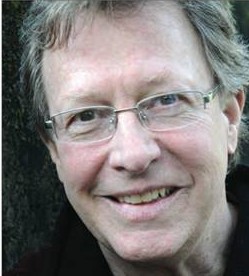
Michael J. Hume, along with Jahnna Beecham and Malcolm Hillgartner, wrote “Dogpark: The Musical” now playing at Oregon Cabaret Theatre. The trio has written other musicals, including “Holmes and Watson Save the Empire,” which Hume directed. He is currently in rehearsal for “The Heart of Robin Hood” and “A Midsummer Night’s Dream” at the Oregon Shakespeare Festival. We chatted one afternoon about the process of writing musicals with friends.
MH: It was like “Singing in the Rain.” Malcolm would be on the piano; we could just sit there writing songs and creating riffs. Then I’d come home and write, and we’d send computer stuff back and forth.
EH: It’s nice that you can collaborate; writing alone can be daunting.
Robin Downward’s Randall Theatre has been producing plays at a breathtaking rate while attracting an untapped audience through a pay-what-you-want policy. Downward also is a gifted actor, performing in his own productions and at other venues such as the Oregon Cabaret Theatre, where he sang and danced as Sherlock Holmes in “Holmes and Watson Save the Empire” and in Cole Porter’s “Let’s Misbehave.” Downward also teaches an acting workshop called Character Creation. We visited at the Randall Theatre in Medford.
EH: What do you cover in your Character Creation class?
RD: A lot of what I do in the Character Creation class, drama therapists do from the standpoint of analyzing yourself as a person, and turning things that you have experienced into positive emotions.
Shae Johnson is now starring as Suzy in Oregon Cabaret Theatre’s “Winter Wonderettes.” Johnson studied opera at the San Francisco Conservatory of Music after graduating from Ashland High School. Returning to Ashland, she performed in the Oregon Shakespeare Festival’s “The Music Man” and in OCT’s “The Marvelous Wonderettes.” She played Debbie Reynolds in Oregon Cabaret Theatre’s “What a Glorious Feeling.” Johnson is now the lead singer of the Rogue Suspects. We met for coffee at Mix Sweet Shop in Ashland.
SJ: I love live theater; I love being in front of an audience, which is very different from being in front of a camera. A camera just stares at you without any emotion. With an audience, it’s very in the moment; every show is different, because you have a different audience every night.
The goal of the actor is to be able to communicate to the audience, to make them feel what you’re feeling and have them relate to what you’re feeling on stage. You can see it. Sometimes when you look out into the audience, you can see when there’s someone in particular who is understanding what you’re doing. As long as there is just one person in the audience who is really loving it, that’s enough for me.
After seeing Oregon Cabaret Theatre’s Cabaret Christmas, I was determined to interview Kymberli Colbourne, a delightful comedic actress, director, and cabaret artist. We lunched at Dragonfly in Ashland.
EH: How did you create Cabaret Christmas?
KC: We went into development in May of last year. There was a lot of research and blood, sweat, and tears. That’s the thing about creativity. Creativity is about chaos and risk.
EH: What draws you to perform on stage?
KC: I love the immediacy of the relationship between myself, the playwright, the actors, and the audience. There’s no other place where that happens in that way. For me the true meaning of theater is ensemble. I consider the audience part of that ensemble because it’s the energy that they bring that completes what we do.
The playwright gives us a skeleton. In rehearsals we put the flesh on that skeleton. Then every night we have to breathe the life into our characters in each moment. What the audience brings is the final piece of the relationship; that makes that world real, because they buy into it, and they take the journey with us.
After seeing Robin Downward’s extraordinary performance as Sherlock Holmes in Oregon Cabaret Theatre’s “Holmes & Watson Save the Empire,” I decided to check in with Downward and learn a little about his acting technique. We met at his own Randall Theatre in Medford as he was preparing for the opening of “Scots on the Rocks.” After a tour of the theater, we settled in his spacious and comfortable office.
EH: What is your vision for the Randall Theatre?
RD: The community of Medford needs a good, solid, community-based theater that serves the community through its outreach, not just within its doors. There is theater here; it’s just not accessible to the general public. One of my ideas is called “exterior theater,” theater that happens outside, in the parks or out in the streets. Theater has the opportunity to change people’s lives for the better, but it’s not going to do it if all that is happening is within the walls and the confines of the theater. It has to go into the community to be effective.
Jahnna Beecham and Malcolm Hillgartner are the masterminds behind the smartly conceived and composed “Holmes & Watson Save the Empire,” a musical mystery playing at Oregon Cabaret Theatre and directed by Michael Hume.
Beecham and Hillgartner are married with two children and have developed a successful writing partnership. We visited together in their charming and whimsically decorated Ashland home.
The couple met in the 1970s, when they were actors at the Oregon Shakespeare Festival.
JB: We acted a lot in regional theater, but continued to write wherever we went.
MH: We didn’t feel restricted, that we could only do theater, but we always felt that if you could find an opportunity you should take it. We learned early on that you have to have lots of balls in the air because as soon as you think that one thing is going to go, that’s when suddenly there’s a change in administration. And the new theater producer or editor is saying, “I’ve got my own friends I’d like to hire.” Then you have to network a new way.
This is the third show that OCT’s done of ours. The first show, “Chaps,” was a British radio show/cowboy musical. The second show, “They Came From Way Out There,” was written with Michael Hume.
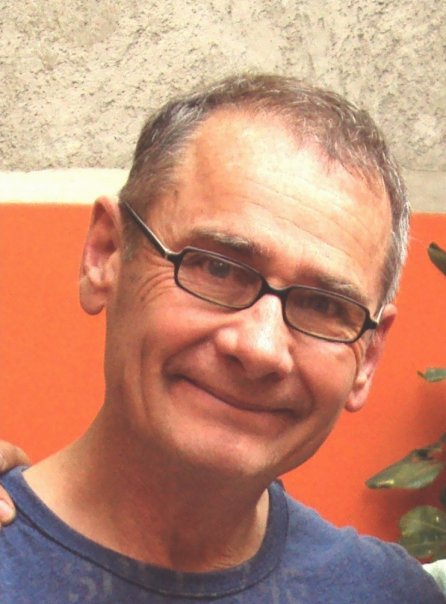
Oregon Cabaret Theater’s founding director, Craig Hudson, has been its resident scenic and lighting designer for the past 26 years. A former professor of theater arts at Southern Oregon University, Hudson divides his time between his design projects at OCT and the Red Tree House, a bed and breakfast he designed and built in Mexico City.
For those of you who haven’t visited OCT, it’s a gracious, polished, welcoming environment that serves up tasty dinner theater. Audiences are consistently satisfied, and so is the OCT staff, some of whom have been there since the theater’s inception. Hudson and I met for coffee at the Rogue Valley Roasting Co. on Ashland’s East Main Street.
CH: I’d always wanted to have a theater. When I was at grad school at Penn State, I was talking to friends who collected memorabilia from old Philadelphia theaters. I said, “Someday I want to have my own theater; if you ever see a big main chandelier for sale, let me know.” They knew of one. So I carted around this huge chandelier looking for a place to put it. That’s the chandelier in the Oregon Cabaret Theatre.
EH: How did you find this fantastic space?
CH: One day a friend said, “You have to come and look at this building.” Somebody had kicked in the back door of this old church. And I thought, my God, this would be a great theater.
EH: Do you have a favorite set that you’ve designed?
CH: We used to do a lot of dinner theater at SOU. We did a very good “Tom Jones.” People were eating in what was the auditorium. We’d put platforms over the seats. The ceiling was tented. We built a whole balcony. Actors could go down stage, up through the audience, up staircases, around, and back down on the stage. It was really fun. The food service was integrated into the show. The audience was brought into the space, and everything happened around them. It was one of those total experiences. It was magical, the minute you walked in.

 Ashland Theatre