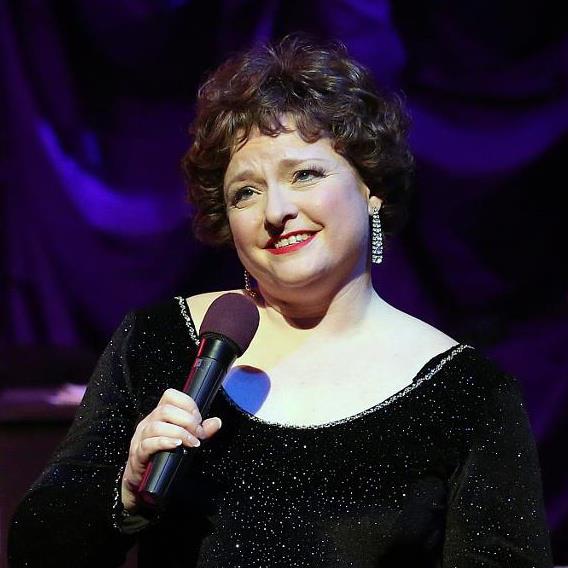
Actor/singer/composer, Laurelia Derocher, is the artistic director for Broadway at the Blue, a brilliant Broadway theater musical experience currently at Gloria Rossi-Menedes’ lively restaurant, BLUE – Greek on Granite. Laurelia and I recently chatted over coffee at the Boulevard Café in Ashland.
EH: Why are your performances of those Broadway songs so unique?
LD: The songs are lyrically and melodically rich. They’re well written. They say something meaningful. And we are able to convey the message of the songs by being willing to go to emotional places as actors. That is something that distinguishes musical theater performers from just really good singers.
Broadway at the Blue is a wonderful outlet for an actor, because you get to play all sorts of characters in one night, even characters that you’re not really appropriate for. At the last show, I sang a song from Little Shop of Horrors. Audrey (who is in her twenties) sings this young, innocent, dreamy song. I would never be cast as Audrey today.
We also do sing-a-longs with the audience. Singing together brings people together.
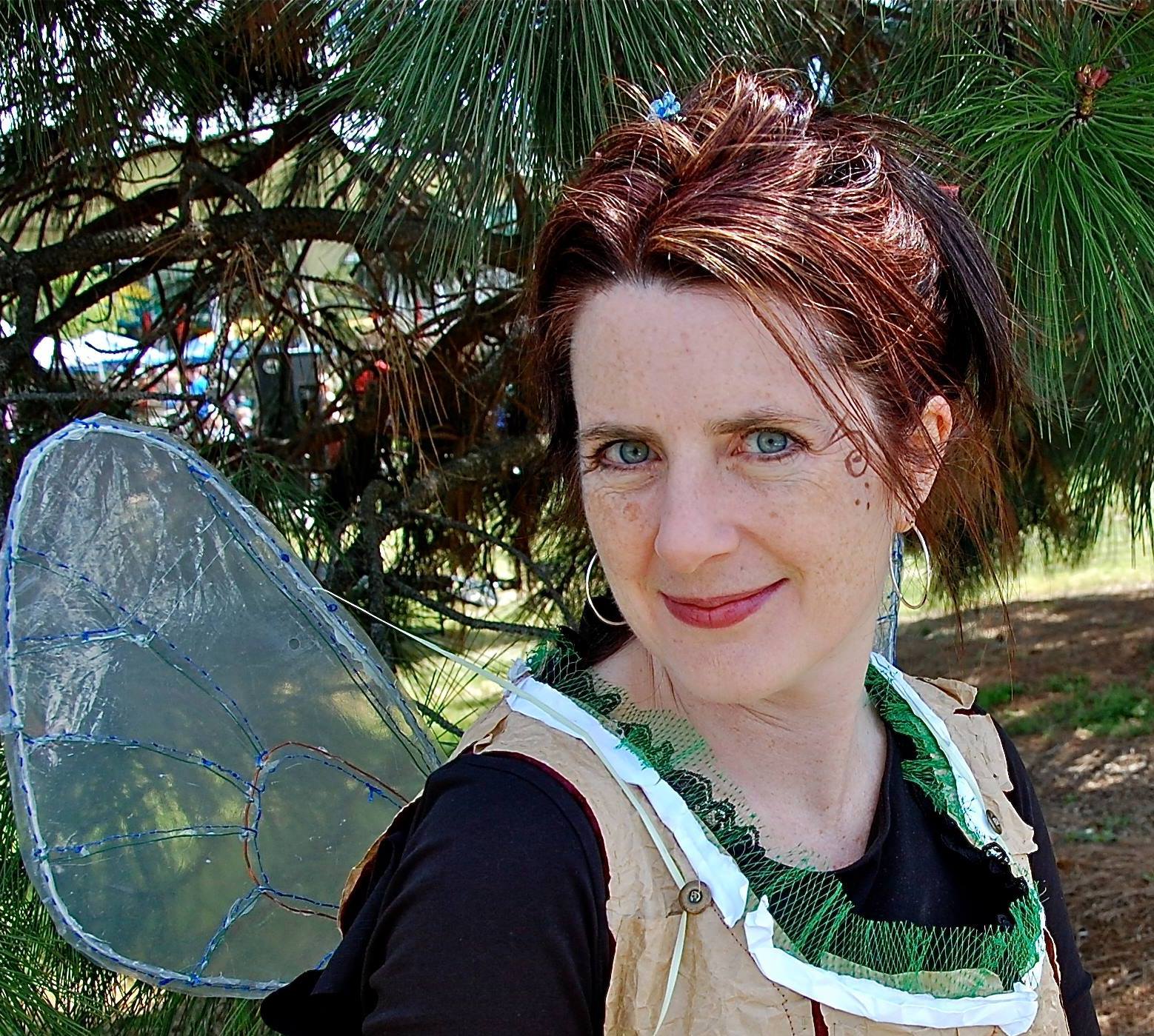
After seeing Oregon Cabaret Theatre’s Cabaret Christmas, I was determined to interview Kymberli Colbourne, a delightful comedic actress, director, and cabaret artist. We lunched at Dragonfly in Ashland.
EH: How did you create Cabaret Christmas?
KC: We went into development in May of last year. There was a lot of research and blood, sweat, and tears. That’s the thing about creativity. Creativity is about chaos and risk.
EH: What draws you to perform on stage?
KC: I love the immediacy of the relationship between myself, the playwright, the actors, and the audience. There’s no other place where that happens in that way. For me the true meaning of theater is ensemble. I consider the audience part of that ensemble because it’s the energy that they bring that completes what we do.
The playwright gives us a skeleton. In rehearsals we put the flesh on that skeleton. Then every night we have to breathe the life into our characters in each moment. What the audience brings is the final piece of the relationship; that makes that world real, because they buy into it, and they take the journey with us.
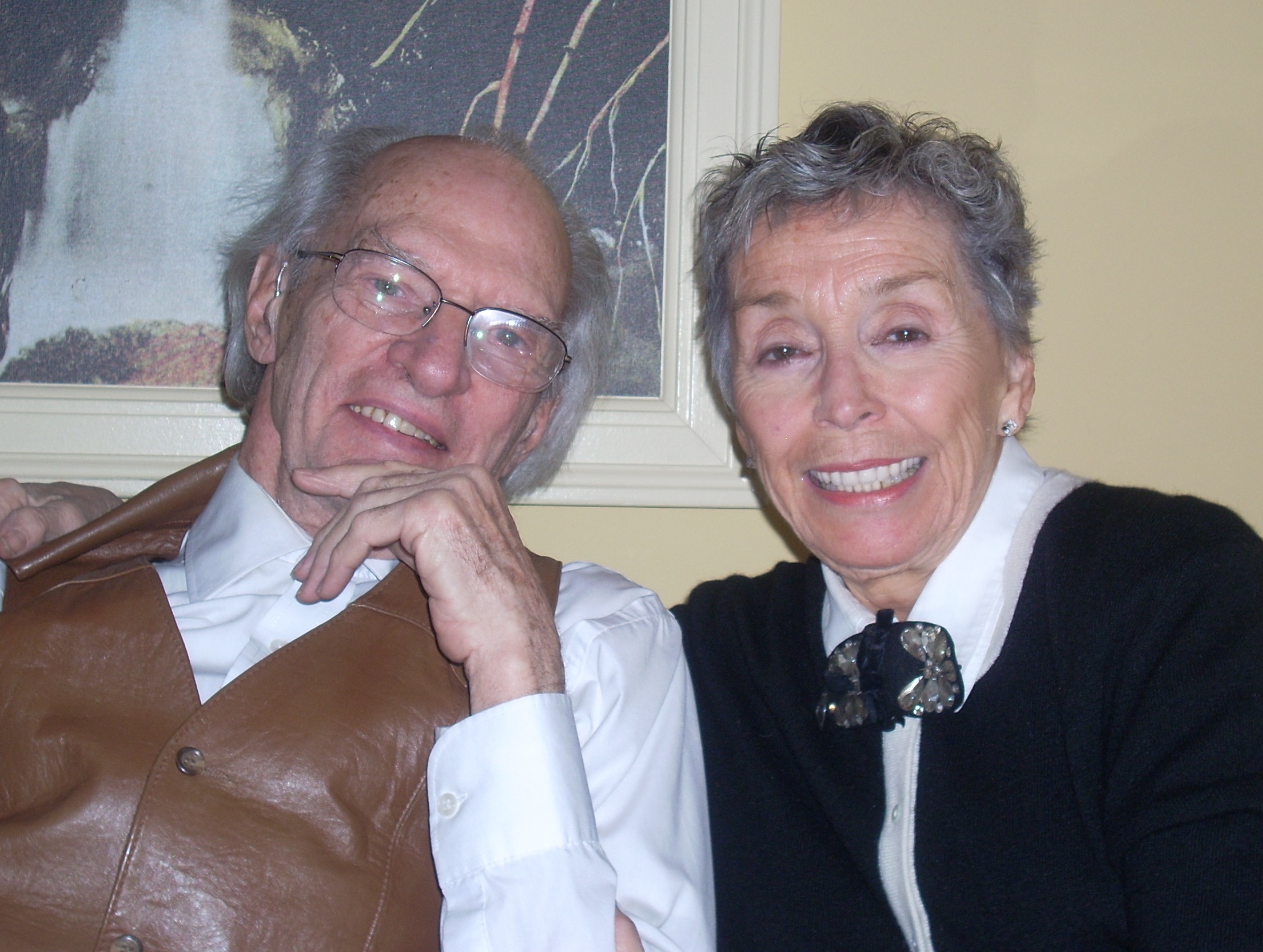
Dee Maaske and her husband Paul Roland have both enjoyed long and successful acting careers. Their work in theater has taken them throughout the world. They now make their home in Ashland, where Maaske has performed numerous roles for twenty seasons at the Oregon Shakespeare Festival. We visited over a scrumptious lunch at Larks.
EH: Is there a favorite role that you would like to play?
DM: I would like to find a really fine new play that explores the feminist movement. We need to remember what that was all about. To my knowledge, nobody’s written about the feminists of the 1970s, and they should. Gloria Steinem and Bella Abzug had to fight so hard. These women really took a lot of abuse as they opened doors for young women to become architects, doctors, engineers, and heads of corporations. It wasn’t just about burning your bra. All movements are about something much deeper than that, something that hits the core of a population: hence the Occupy Movement today.
Designer and director Doug Ham’s recent work has included some remarkable set designs.
At the Craterian Ginger Rogers Theater, his design for “Joseph and the Amazing Technicolor Dreamcoat” consisted of colossal, colorful, multi-dimensional pyramids on which were played wide-ranging scenes in far-flung locations. The Next Stage Repertory Company’s “Tally’s Folly” was set in an exquisite, delicate and decaying boathouse to portray a pervasive psychological landscape. “Chicago,” at Ashland High School, was placed in a cavernous speakeasy with an orchestra on bleachers center stage.
Ham is preparing to direct “You’re a Good Man Charlie Brown” at the Craterian theater, and is designing sets for “The 39 Steps” at Ashland High School. Last week, we chatted at Bloomsbury Coffee.
EH: What makes a good stage set?
DH: If an audience can look at it, understand it, accept it, and know where they are, then it becomes a backdrop for the actors. The most important thing is that the set is an establishment of the location but doesn’t overtake the show. Every show is a new challenge: to do the research, figure it out and understand how it’s going to work for the space. In a small space, you have to be imaginative to make a show work. I designed for a professional company in California with a 50-seat theater. I put a two-story set in there. You have to be creative.
When I read a script, I start imagining where it’s at, what it looks like and what I can do to give the director a lot of choices. As a director, you want different areas, different levels on which to place the actors for a more dramatic scene. If you just have a plain stage and you don’t have a way for them to move to another level, the stage pictures can get boring.
For “You’re a Good Man Charlie Brown,” there are six characters, but I will add an ensemble of 12 more, all Charles Schultz’s characters, like Pig Pen and Peppermint Patty. It will be visual choreography — some fun stuff. It will have a pen-and-color feel to it. I want it to look like the comic strip. There will be a level stage, but upstage I will have a stair unit for the glee club scene. When they’re at the ball game, I can use it as bleachers.
Ashland Children’s Theatre, formerly with Oregon Stage Works, is now on its own and has found a new home at the DanceSpace in Ashland. Founded in 2004 by directors Eve Smyth and Kate Sullivan, Ashland Children’s Theatre is offering summer camps for young people ages 4-17 along with theater camps throughout the year. We visited by a cozy fire at Eve’s pristine cottage.
KS: Landing in the DanceSpace, which is a great performance space, has been a good fit.
ES: We feel really welcomed there. It is on that row where there’s Dance Works and Le Cirque, and it’s like the kids’ own”…
KS: It is kind of a kids alley.
ES: We’re bringing a whole bunch of different elements for them to get a taste of: improvisation games, puppets, stage combat and some Shakespeare. There are new friends to be made and all of that good camp stuff. We’ve actually scheduled everything into 2012.
KS: Our summer camp begins with a TeenProv class, all teens and all improvisation, with Eve. There’s a Showcase at the end.
ES: We follow that with Imagination Travelers and Spontaneous Superstars, which are almost like a theater sampler plate or potpourri.
KS: Our pièce de résistance is our teen Mystery Theatre. Within two weeks we give a performance.
Paul Jones is directing “Crimes of the Heart,” the last production in Camelot Theatre’s current building. Within the last two years, Jones has played Nixon in Camelot’s “Frost Nixon,” Marley’s Ghost in Oregon Stage Works’ “The Christmas Carol,” and Lt. Col. Matthew Markinson in Camelot’s “A Few Good Men.” We chatted over coffee at The Coffee House at Bloomsbury Books.
EH: Why do you think “Crimes of the Heart” won a Pulitzer Prize?
PJ: The play doesn’t bring up any earth-shattering world issues, but it hits people in unexpected places. The appeal is very human, people handling their problems, which to them are monsters, nothing to do with earthquakes, or tsunamis, or the threat of the A-bomb.
It’s about three sisters struggling with making the wrong decisions, listening to their fears, being too logical, or just jumping into something without asking the heart, “Is this what I really want to do?” and then not listening. Those are the crimes.
It’s comical, desperate and pathetic. You find yourself being drawn in with the characters, the traumas that they’re dealing with, and living their lives. It is so well-written, it just plays itself; it flows so beautifully. It’s enormously funny, but underneath are all those layers of what is going on with those people. The audience will find themselves crying and laughing at the same time.
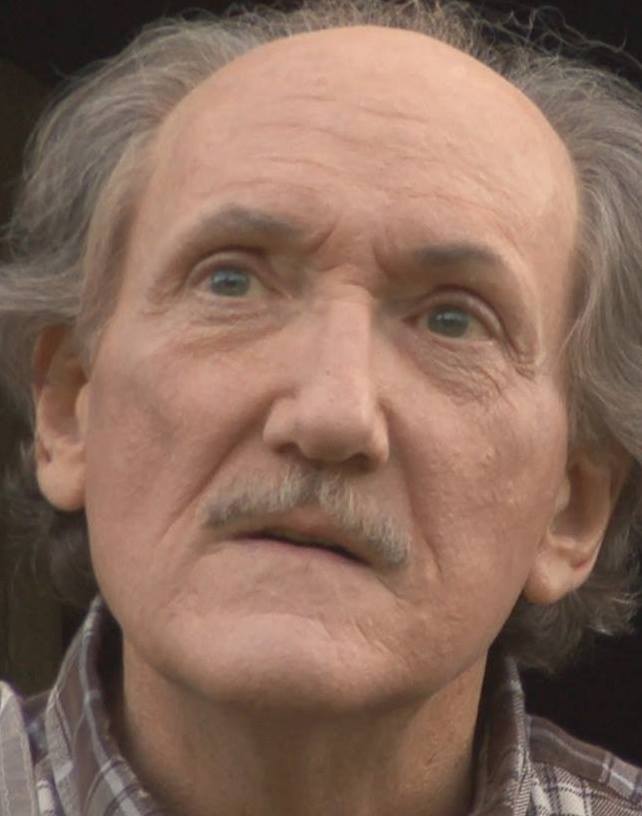
Oregon Cabaret Theater’s founding director, Craig Hudson, has been its resident scenic and lighting designer for the past 26 years. A former professor of theater arts at Southern Oregon University, Hudson divides his time between his design projects at OCT and the Red Tree House, a bed and breakfast he designed and built in Mexico City.
For those of you who haven’t visited OCT, it’s a gracious, polished, welcoming environment that serves up tasty dinner theater. Audiences are consistently satisfied, and so is the OCT staff, some of whom have been there since the theater’s inception. Hudson and I met for coffee at the Rogue Valley Roasting Co. on Ashland’s East Main Street.
CH: I’d always wanted to have a theater. When I was at grad school at Penn State, I was talking to friends who collected memorabilia from old Philadelphia theaters. I said, “Someday I want to have my own theater; if you ever see a big main chandelier for sale, let me know.” They knew of one. So I carted around this huge chandelier looking for a place to put it. That’s the chandelier in the Oregon Cabaret Theatre.
EH: How did you find this fantastic space?
CH: One day a friend said, “You have to come and look at this building.” Somebody had kicked in the back door of this old church. And I thought, my God, this would be a great theater.
EH: Do you have a favorite set that you’ve designed?
CH: We used to do a lot of dinner theater at SOU. We did a very good “Tom Jones.” People were eating in what was the auditorium. We’d put platforms over the seats. The ceiling was tented. We built a whole balcony. Actors could go down stage, up through the audience, up staircases, around, and back down on the stage. It was really fun. The food service was integrated into the show. The audience was brought into the space, and everything happened around them. It was one of those total experiences. It was magical, the minute you walked in.




 Ashland Theatre