Scott Kaiser’s new play, “Shakespeare’s Other Women,” will be presented Feb. 16 to 19 at Southern Oregon University. We met in his office on the Oregon Shakespeare Festival campus, where he is director of company development. This is the second of a two-part column. The first was published on Dec. 26.
EH: You’ve written several books?
SK: Most of my writing has been deeply inspired by Shakespeare.
EH: Why do you find the study of Shakespeare so compelling?
SK: He understood human existence better than any other writer. As you move through stages of life, different characters, plays, scenes, situations and moral conundrums start to read differently. “Romeo and Juliet” is a great example of this. When you’re a teenager, you totally understand Juliet: the passion, the love. But as you get older, you start to look at the parents and what they’re going through; the death of children; hatred towards a rival faction; a prince that is trying to make peace and simply can’t do it. Continue reading A glove-maker’s son’s words reveal worlds→
Author/Director Scott Kaiser has written a new play, “Shakespeare’s Other Women,” to be presented Feb. 16–19 at Southern Oregon University. Kaiser, who first came to the Oregon Shakespeare Festival as an actor in 1985, is now OSF’s Director of Company Development. We met in his office at the new Hay-Patton Rehearsal Center on the OSF Campus. This is the first part of a two-part column. The second will be published on Monday, Jan. 9.
EH: How did this project come about?
SK: I do a lot of auditioning and teaching. For women, there are few Shakespeare monologues. Young women in particular are often forced to use the same monologue over and over. Most of the monologues do not represent the full range of the female experience. I started to write speeches to try to expand the canon of material for women to use. It’s meant to be a new collection of monologues for women. I’m writing them in verse, the way that Shakespeare would have written them.
These are characters mentioned by Shakespeare (but who don’t appear), historical characters and mythological characters that are invoked. I have drawn from the canon, characters that you are curious about and given those women a chance to have a full appearance. Continue reading Getting to know ‘Shakespeare’s Other Women’→
Not to be missed this Christmas season is the Collaborative Theatre Project’s “The Snow Queen.” The music, staging, acting, and costumes are superb. Under Susan Aversa-Orrego’s direction, talented actors and musicians have come together to create this magnificent piece.
Director Obed Medina is a founding member of the project. We met in their new theater in the Medford Center, which includes Tinseltown.
Developers are revamping the whole complex and are trying to make it into an entertainment/arts destination, to bring in more restaurants and breweries. Once they get those in, it will become a nice little hub of entertainment.
EH: How did you get interested in theater?
OM: When I was 9 or 10, I saw a play at a community theater that really moved me. Then, I wanted to be a writer, but when I went to college, I got involved in theater. Theater did that same thing for me: You can do almost what a book or an essay can do, but in a compact and more powerful way. It’s got more impact because you’re watching the actor on stage. It’s not a movie, where you can just sit and think about what you’re hearing or seeing, you’re actually interacting with that actor. There is a connection with the actor and the audience, and every performance is different. Continue reading Collaborative Theatre Project aptly named→
Director-actor Ron Danko and musician-music Historian David Gordon have formed The Madrone Theatre Company to produce a new adaptation of the “Spoon River Anthology,” opening Oct. 7 in the Rogue Community College Performance Hall in Medford.
Published in 1915, Edgar Lee Masters “Spoon River Anthology” portrayed small town rural America through poetic portraits of numerous characters who somehow spoke from beyond the grave. Danko pulled 50 out of 240 vignettes and invited David Gordon to weave music into the production. I met Danko and Gordon one afternoon in Rogue Community College’s pristine black-box theater.
EH: How would you describe the “Spoon River Anthology”?
DG: It’s like a haiku or a miniature painting. It somehow condenses life down into its absolute minimal number of words or strokes. These are vignettes about life by people who are done with living. They don’t have to put on pretenses or lie any more. They can be totally honest about their successes and their failures. They admit their failures. To me, the mastery of it is that (sometimes in just a few dozen words) each one creates this little reality that has emotion in it.
Penny Metropulos directed and co-adapted (with Linda Alper) “Great Expectations” by Charles Dickens, now playing at Oregon Shakespeare Festival. Other OSF adaptations to her credit are: “The Three Musketeers,” “Tracy’s Tiger” and a musical version of “Comedy of Errors.” Metropulos originally came to OSF as an actor and singer in 1985. After three seasons, she turned to directing.
EH: Did directing come naturally to you?
PM: I went to a training program at the London Academy of Music and Dramatic Arts. It was about collaboration. It wasn’t the “dog-eat-dog” kind of thing. I came back with this holy grail of “company,” and that never left me. The idea of being in a theater company has always been with me. And I have been lucky enough to do that.
Because of my background as an actress, I had done a lot of classical, contemporary and musical work. Right away, I was doing all different kinds of things. I guess it was right because the work kept coming. I took every job because I needed to learn how to do this. It was great. I knew it was right.
I started singing so early in my life, that singing was always second nature to me. That’s what directing felt like. It was like breathing, like singing. It was the right thing for me. At the end of my acting career, I realized that I never wanted to leave the rehearsal hall — the process was what was interesting. Continue reading OSF’s ‘Great Expectations’ director shares story behind the story→
Desdemona Chiang is directing “The Winter’s Tale” opening June 19 on the Elizabethan Stage at The Oregon Shakespeare Festival. Born in Taiwan and raised in Southern California, Chiang “fell into” the Dramatic Arts Department at UC Berkeley as stress relief from her pre-medical studies. Then she decided medicine wasn’t her path. We met at Mix.
DC: It was spiritually hard to pursue the sciences in a way that a good doctor has to: to be able to look at someone and treat them as a patient, not as a person. I had a hard time looking at suffering, and having to turn myself off to it, in order to do my job well. Lack of compassion made me feel bad as a person. I’m too sentimental. I know that great doctors are able to be compassionate, have great bedside manner, and at the same time tell you, “I’m sorry, you have stage-four cancer.” I didn’t know how to do that.
I mucked around in Silicon Valley, for a while designing websites and programming. It was cool, innovative, creative and cutting edge. But it didn’t make me happy. We weren’t asking the humanistic questions, the big life questions that we ask in theater around: “Why?” and “What does this all mean?”
And then I decided I wanted to do theater professionally. I was looking at Berkeley Rep, ACT, at The Magic Theatre, and I thought, “There is a world in which people can do this as a job, and not the fringe thing.” I decided grad school was the way to go. I went to The University of Washington at Seattle. Jon Jory (the acclaimed director) was there at the time. He was my mentor for three years. A lot of my approach to rehearsal and to actors has a lot to do with his influence.
EH: Tell me about the world of the play.
DC: We’re taking a note from the original Shakespeare impulse. We’re making our own fairy tale based on certain cultural inspirations from Dynastic China and the Old West, set historically. It’s timeless in the way that, “Once upon a time there was a jealous king.” We place fairy tales in a time. We know they exist out of our time, but we don’t know in what time they do exist.
EH: There is an Oracle in the play?
DC: The Oracle is present in the play, but is not tangible material. You have to believe what you can’t see. There is so much in the play about seeing and not seeing. Once you see something, you have certainty. Once you’re certain of something, what’s the need for faith? That’s what’s so dangerous in religion now. Some say, “We’re certain of this.” Faith is in the space of certainty. That’s where that bridge is to get across. That’s where faith is necessary, “I don’t know but I believe, I hope and I believe.” For me, faith and certainty are opposites.
EH: Is this play tragicomedy?
DC: It’s one of Shakespeare’s Romances. “Cymbeline,” “Pericles,” “The Winter’s Tale” and “The Tempest” are the big four Romances where you start seeing magic. You see magic in “Macbeth,” but that is more of the occult. Here you have resurrection happening: People die and come back. You have the intervention of the Divine. You have playing with time. Nowhere else, in his other plays, does he jump time and generations.
There’s a lot of study around what it means for Shakespeare to be writing these Romances in the later years: That’s to be more spiritual, more existential.
Betsy Bishop is the theater director and producer behind Ashland High School’s outstanding theatrical productions. Plays are produced in collaboration with the Oregon Shakespeare Festival, which provides directors and technical assistance.
Bishop spent her early years as a professional actress. She earned a master’s degree in education from Southern Oregon University and began a long teaching career. Now, as a mother of three grown children, she continues, as a full-time teacher, to mastermind this remarkable theater program. I met with Bishop one Saturday morning on the ASH theater stage.
EH: How did your partnership with OSF begin?
BB: When I was asked to teach theater, I had small children, and I had to be home at night. You can’t have a theater program without having shows. I told the kids, “I’m going to teach the classes, but we have to think of a way that other people can do the nighttime work.” My student, Matt Smith, went down to the Oregon Shakespeare Festival and talked to Pat Patton (former OSF associate artistic director) and Pat Patton said, “Of course we’ll help the high school.” And that was the beginning of the partnership. Continue reading Ashland High students learn the magic in storytelling→
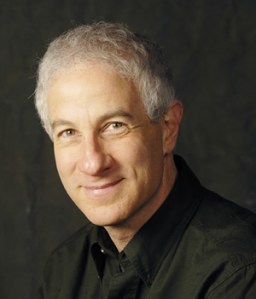 Scott Kaiser’s new play, “Shakespeare’s Other Women,” will be presented Feb. 16 to 19 at Southern Oregon University. We met in his office on the Oregon Shakespeare Festival campus, where he is director of company development. This is the second of a two-part column. The first was published on Dec. 26.
 Author/Director Scott Kaiser has written a new play, “Shakespeare’s Other Women,” to be presented Feb. 16–19 at Southern Oregon University. Kaiser, who first came to the Oregon Shakespeare Festival as an actor in 1985, is now OSF’s Director of Company Development. We met in his office at the new Hay-Patton Rehearsal Center on the OSF Campus. This is the first part of a two-part column. The second will be published on Monday, Jan. 9.
 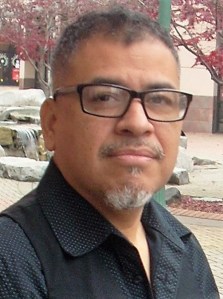 and more powerful way. It’s got more impact because you’re watching the actor on stage. It’s not a movie, where you can just sit and think about what you’re hearing or seeing, you’re actually interacting with that actor. There is a connection with the actor and the audience, and every performance is different.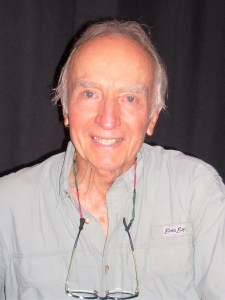
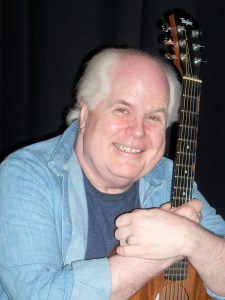 Director-actor Ron Danko and musician-music Historian David Gordon have formed The Madrone Theatre Company to produce a new adaptation of the “Spoon River Anthology,” opening Oct. 7 in the Rogue Community College Performance Hall in Medford.

 Ashland Theatre