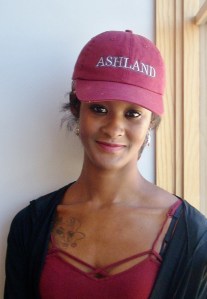
 Asia Mark plays the Apprentice Poet in “UniSon,” Oregon Shakespeare Festival’s tribute to the poetry of August Wilson devised by UNIVERSES. While at Western Michigan University, Mark attended Lecoq acting training with the Arts University Bournemouth, England. She also auditioned for UNIVERSES and has been touring with them for the past two years. We met in the Hay-Patton Rehearsal Center on the OSF Campus.
EH: Tell me about UNIVERSES.
AM: UNIVERSES is an interdisciplinary theater company that fuses poetry, music, rhythm and dance; they do a lot of commissioned work. It started off in the NuYorican Poets Café on the Lower East Side of New York City: When you do slam poetry, you only have about three minutes on stage. Four poets combined their poetry, to have more time; they fused their poetry. That’s where the origins of UNIVERSES came from.
EH: What was your process of developing “UniSon”?
AM: It felt like were jumping into a world of poetry — a world of the unknown. It’s heavily written by UNIVERSES, with the support of August Wilson’s poetry. It is a linear play, but there are so many different aspects and poems. None of us knew what the play was, until opening night. We’re still figuring out things about this play, because there is so much to take from it.
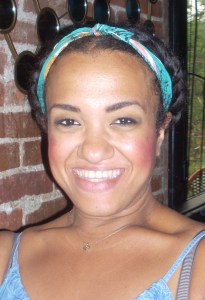 Oregon Shakespeare Festival actor Lauren Modica, appears in “Henry IV, Part One” and “Henry IV, Part Two,” where she portrays multiple roles including Peto, the gal pal of Falstaff and Price Hal. Next season she will be playing in “Romeo and Juliet” and “Sense and Sensibility.” Modica is from Portland, where she developed her extensive resume by performing in many of the remarkable theaters there. She was hired after she submitted a video audition to OSF.
 Oregon Shakespeare Festival actor Michele Mais plays Mistress Quickly in “Henry IV, Part 1” and “Henry IV, Part 2.” Next season she will again be playing Mistress Quickly in “Henry V.” Mais, a veteran of Broadway, has also performed with the Cornerstone Theater Company. We met at Hearsay in Ashland.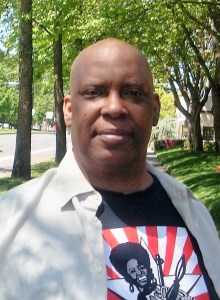
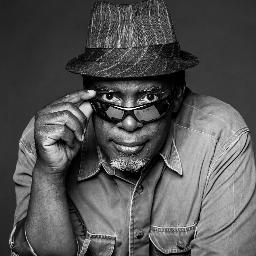 Actor G. Valmont Thomas brilliantly portrays Sir John Falstaff in “Henry IV, Part One,” now playing at the Oregon Shakespeare Festival. He will also play Falstaff in “Henry IV, Part Two.” This is Thomas’ 14th season with OSF. A native of the Pacific Northwest, Thomas took time out from his acting career to earn an MFA in Directing for the Theater from Pennsylvania State University. We met at Boulevard Coffee in Ashland. This is the first of a two-part interview. The second will be published on June 26.
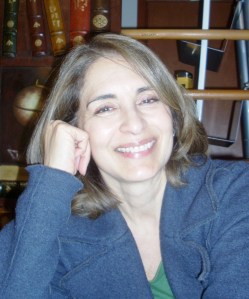 Vilma Silva has portrayed such iconic characters as Portia in “The Merchant of Venice,” Julius Caesar in “Julius Caesar,” and Katherina in “The Taming of the Shrew” during her 23 seasons at the Oregon Shakespeare Festival.
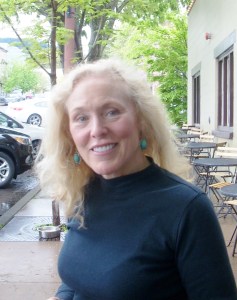 Liisa Ivary is directing David Ives’ version of Georges Feydeau’s “A Flea in Her Ear,” opening Wednesday, May 3, at Ashland High School. There’s a cast of 20 student actors and a good deal of technical support from Ivary’s colleagues at the Oregon Shakespeare Festival, including fight director U. Jonathan Toppo.
 Ashland Theatre