
Tag Archives: OSF

What actors want: to tell stories

Alejandra Escalante

Oregon Shakespeare Festival actor, Alejandra Escalante, plays Hotspur, the hardened, quick-triggered leader of the rebellion, in OSF’s production of “Henry IV Part 1.” Escalante’s recent OSF roles include Miranda in “The Tempest” and Juliet in “Romeo and Juliet.”

EH: Do you have a theory or method of acting?

AE: I had great teachers at Boston University. I had a fantastic physical acting teacher named Elaine Vaan Hogue who changed my view of what acting could be. Everyone has methods that work for them; a lot of times, we just take bits and pieces from here and there.

The Stanislavsky and Meisner techniques were fascinating to me, but they were very intellectual. I don’t think they actually work for me. I had a hard time applying them to my character. Whereas physical acting for me was, “Oh this, I can get.” It was eye-opening for me, that I didn’t have to write down every tactic and all my verbs: which is really cool; but it just doesn’t work for me. I need to have a very strong understanding of the language. Physicality helps me understand the characters, an understanding of who they are in their bodies. Continue reading What actors want: to tell stories
Jeremy Johnson: Embracing the new and old

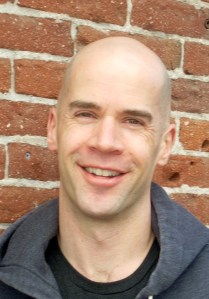
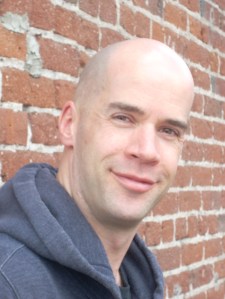
Jeremy Johnson has been with the Oregon Shakespeare Festival for eight seasons. He was a superb Sky Masterson in OSF’s 2015 production of “Guys and Dolls.” This season he will be portraying Doctor Caius in “The Merry Wives of Windsor,” and M. D’Arque in Disney’s “Beauty and the Beast.” This is the second of a two-part interview. The first was published on March 6.

EH: Is there a common quality that all actors share?

JJ: The vast majority of actors I have met have been very warm: outgoing, even if a little shy. There’s that stereotype that actors need a lot of approval, and I’m sure that’s true sometimes. But actors have also been, in my experience, unbelievably generous and open-hearted.

EH: Do you have a theory of acting or method?

JJ: I went to Northwestern University. I studied with David Downs. He would focus on: How can you be clear and understood and believed on stage from a purely technical point of view? How do you build a character physically? If you start with a role, and you say, “Who is this person?” How do you go about creating that character in a meaningful believable way?

Continue reading Jeremy Johnson: Embracing the new and old

OSF actor directs ‘Sweeney Todd’ at AHS

Actor Jeremy Johnson of the Oregon Shakespeare Festival directed Steven Sondheim’s “Sweeney Todd,” now playing at Ashland High School. With a talented cast of 22, a full orchestra, and a towering revolving set, the production is a fantastic musical delight.

For decades the Oregon Shakespeare Festival has contributed to Ashland High School productions, with company members making time to direct, design and choreograph shows

Johnson discovered acting at age 10 and decided to become a professional actor early on. He majored in theater at Northwestern University and acted in New York and Los Angeles before coming to the Oregon Shakespeare Festival 10 years ago. Johnson played Sky Masterson in OSF’s production of “Guys and Dolls” in 2015. We met near the fireplace at Mix. This is the first part of a two-part interview. The second will be published on March 20.

EH: Tell me about “Sweeney Todd.”

JJ: It is a classic of musical theater, a 1979 Tony Award Winner with eight Tony Awards. It is a masterwork of construction and composition. And it is endlessly satisfying in its complexity: In the questions that it raises, and how it seeks to answer them. It is also just a lot of fun. Continue reading OSF actor directs ‘Sweeney Todd’ at AHS

‘The final character of any play is the audience’

Jamie Ann Romero is playing Viola de Lesseps, the fascinating muse of young Will Shakespeare, in “Shakespeare in Love” opening Saturday, Feb. 25, at the Oregon Shakespeare Festival. Romero, who played Juliet in “Romeo & Juliet” at the Colorado Shakespeare Festival, is looking forward to playing both Romeo and Juliet in “Shakespeare in Love.” We chatted over lattes at Mix Bakeshop in Ashland.

EH: What is it like to work at OSF?

JR: It’s a great collaborative team process. You’ve got everything that you could possibly need. They have personal trainers; we have the Feldenkrais method to help realign your body; then there are voice and speech coaches and dialect help.

EH: How do you approach a play?

JR: What helps me is building it with fellow actors and the director. Christopher Liam Moore is a brilliant director. He’s really collaborative, he’s willing to hear ideas, and try different things. He has such a great eye. He knows what he wants, but he is willing to try other things too. Continue reading ‘The final character of any play is the audience’

A good director can say ‘I don’t know’

Actor Kate Mulligan of the Oregon Shakespeare Festival recently played Maria in “Twelfth Night.” Mulligan has been part of OSF’s

Kate Mulligan

acting ensemble for the past eight years. Before that, she worked in film, television and with an experimental theater, The Actor’s Gang, in Los Angeles. This is a second of a two-part column. The first part was published on Oct. 31.

EH: What do you value most in a director?

KM: I love a director who says, “I don’t know.” A director who thinks that they have it all figured out is not going to be a joy to collaborate with. Sometimes, anybody in a leadership position is afraid to admit that they don’t know what they’re doing. Somebody right in front of them might have the answer they’re looking for, if they just have the lack of ego to ask.

Kindness and great communication goes a long way. Then being a great leader saying, “We’ve shaped this. This is what we’re going to do. Do it again and again and again. Remember why you found this beat. Remember why we chose this moment to be the way it is,” so that you’re not recreating what you did yesterday, but re-finding it so you can make it new. Continue reading A good director can say ‘I don’t know’

Advice for an actor — Don’t show it, be it

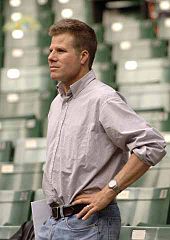
Kate Mulligan of the Oregon Shakespeare Festival will be playing Mrs. Potts in “Beauty and the Beast” next season. Mulligan, with her husband, Brent Hinkley, came to OSF from Los Angeles after longtime affiliations with Tim Robbins and The Actor’s Gang. I visited with Mulligan at Mix Bakeshop in Ashland. It is surprising that this trim, young, attractive woman is such an accomplished character actor. This is the first of a two-part column. The second will be published on Nov. 14.
EH: As an actor, what was your attraction to theater?

KM: I was drawn to the danger of live theater: You don’t get to stop and take another take; things go wrong all of the time, and, “How do you tap dance around it, to make sure that nobody sees all the disaster that’s occurring?”

Doors started opening, and I walked through all of them. I learned what I love, what I was good at, how I could improve, and to have great respect for all aspects of the job. I’ve learned how to take criticism well because I’ve gotten a lot of it. Continue reading Advice for an actor — Don’t show it, be it

Bringing theater to the people where they live

Bill Rauch

Before becoming Artistic Director of the Oregon Shakespeare Festival, Bill Rauch was the Artistic Director of Cornerstone Theater Company. Cornerstone is a multi-ethnic theater ensemble, based in Los Angeles, which produces new plays nationwide.

BR: We started Cornerstone because we heard that only 2 percent of the American people went to professional theater on a regular basis. We thought, “Even if we’re lucky enough to be successful in the professional theater, we’ll have only performed for 2 percent of our fellow citizens. That’s not good enough.”

We went to isolated rural communities and put on plays with the people who live there, because we could learn more about what interested people, and re-invent theater from the ground up. We would move to very small towns, anywhere from 200 to 2,000 people — Towns that would make Ashland look like a giant metropolis.

We would usually adapt a classic play, and set it in the community that we were working with. It was incredible work; it was life-changing for all of us who were part of it. We did that work on the road, in small towns, for five years. Continue reading Bringing theater to the people where they live