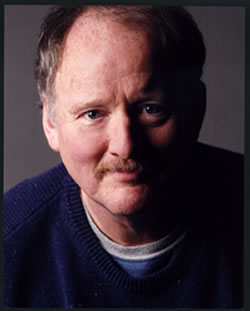
Ashland playwright David Hill is conducting a workshop with other Ashland writers to develop plays in the vein of “The Twilight Zone.” Participants are developing psychological thrillers to be presented in a dramatic reading by Ashland Contemporary Theatre on Halloween in the Gresham Room of the Ashland library. Hill was a student of Rod Serling, the originator of the iconic television series “The Twilight Zone.” We got together one afternoon at Boulevard Coffee.
EH: Can you tell me about the genesis of “The Twilight Zone”?
DH: Serling started “The Twilight Zone” because he wrote a television play about racial prejudice that generated a lot of controversy. The network executives made him water it down and change it so that the entire point was lost. He figured that the only way he could say what he felt needed to be said was to disguise it as science fiction. That’s how he got the idea for the television series. He wasn’t that interested in science fiction, but he felt if you’ve got spacemen and monsters in a script, the networks were not going to relate it to a political situation, even though it was.
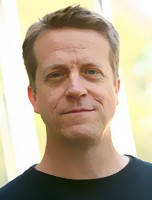
Michael J. Hume, along with Jahnna Beecham and Malcolm Hillgartner, wrote “Dogpark: The Musical” now playing at Oregon Cabaret Theatre. The trio has written other musicals, including “Holmes and Watson Save the Empire,” which Hume directed. He is currently in rehearsal for “The Heart of Robin Hood” and “A Midsummer Night’s Dream” at the Oregon Shakespeare Festival. We chatted one afternoon about the process of writing musicals with friends.
MH: It was like “Singing in the Rain.” Malcolm would be on the piano; we could just sit there writing songs and creating riffs. Then I’d come home and write, and we’d send computer stuff back and forth.
EH: It’s nice that you can collaborate; writing alone can be daunting.
Southern Oregon University associate professor David McCandless is directing the premiere of his play “Invisible Threads,” which opens Thursday in SOU’s Center Stage Theatre. We chatted in his office in the Theatre Arts Department.
DM: The premise is, a mysterious figure recruits some down-on-their-luck actors to apply their thespian skills to rescue some people from real-life crises. It preys upon that ethic angst that a lot of actors have: that they’re not contributing to the world; that they’re not really doing anything to help people; and that they’re just indulging themselves.
It explores the thin border between illusion and reality. It has to do with that theater and life continuum. It’s meant to be an examination of role-playing and identity, and the joys and the limits of theater.
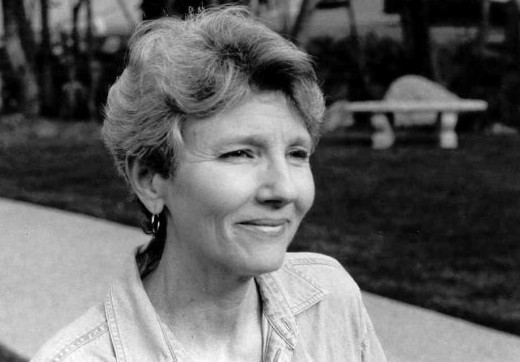
Ashland playwright Molly B. Tinsley’s “Pompadour” will premier Saturday, Jan. 19, with Ashland Contemporary Theatre. Peggy Rubin directs, and Jeannine Grizzard plays the titled mistress of King Louis XV of France. Molly and I met at Bloomsbury Coffee.
EH: What was the inspiration for “Pompadour”?
MT: There was an exhibit at the Portland Art Museum called “La volupte du gout (taste of the voluptuous): French Painting in the Age of Madame de Pompadour.” I went through it three times. I was fascinated by the overripe, color-saturated, complacently allegorical imagery.
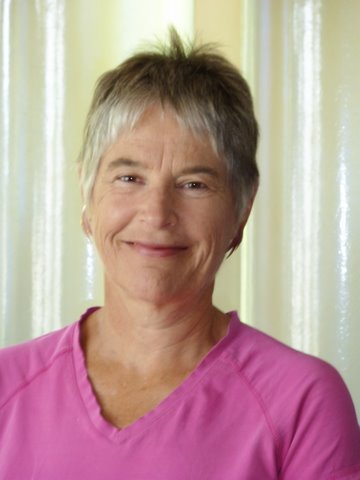
Playwright Julia Sommer’s next production has the intriguing title “Death, Dogs, Dope and the Divine.” Sommer, a former journalist, rock and roll singer and Zen monk, is a self-taught playwright. She has been writing plays for the past five years. We visited in her charming Ashland home.
EH: What’s our attraction to theater?
JS: As a member of the audience, it’s magic. You see real-live 3-D, living, breathing people performing these incredible roles and you get totally caught up in it, and you’re moved. And sometimes you do have new thoughts and new ways of looking at things.
The show, the lighting, the costumes and the sound — you get the spectacle. And here you are in a nice comfortable seat, you’re totally catered to and there are the actors doing these incredible things. It’s stimulating. It’s entertaining.
I think the difference between the two-dimensional screen and the three-dimensional theater is you’re in the room with three-dimensional people, and they’re not being edited. It’s not all manipulated like it is on the screen.
It’s a miracle, in this crazy world, that we actually still have the wherewithal to put on these kinds of professional productions. That despite all of the ghastliness, all of the terrible things going on in this world, we can actually get it together to put on these incredible plays.
Playwright Bert Anderson conducts the Atelier, the popular Playwright Actor Workshop that provides a free venue for dramatic readings of new plays by local playwrights in Ashland. An Episcopal minister and retired marriage and family counselor, Anderson began writing plays in 2005 while attending local writing workshops. We met at Boulevard Coffee one bright winter afternoon to talk about the Atelier and his most recent play, “Mr. Brightside and the Bonfire Nights.”
EH: Your play had so many bizarre incidents and characters; where did they come from?
BA: Some of it comes from the fact that I was a therapist in a residential treatment program where I met a lot of boys who were mentally disturbed, delinquent kinds of kids. The idea for the play came from a New York Times article that describes the boys from Texas who had burned twenty churches. These boys have good people as parents. There was a lot of detail about family, but not about the boys’ motivation. It all came together in my right brain and put it down on paper. The play is totally fictional.
There’s this very vulnerable age that seems to be repeated over and over again, of nineteen to twenty year old kids: The Texas tower shooting, the Columbine shooting…It’s a very vulnerable age. The main character in my play is a damaged human being. I put in possible things that could have damaged him. The play is about his emotional arc.
This play has nine different characters, and you carry all of those characters in your head as you’re writing the play: all of their personalities, all of their quirks, and hopefully all of the arcs that they’re going to make in the play. It’s an amazing process.
EH: You’ve created this marvelous forum for playwrights, the Atelier.
BA: I belong to the Ashland Playwrights’ Project, and I kept hearing people say, “When we write a play there’s no place to hear it”. There just wasn’t a forum.
EH: Where does the name come from?
BA: It’s simply French for workshop. There are all kinds of workshops. In our country the word is implied with an artistic idea.
We want plays by local playwrights. And we want fresh material. Some people in this community can open a file drawer and pull out plays from the ‘50s. Basically we’ll take any full length or full one-act play that is current that is fresh for the writer. It can be a monologue. We prefer not having screenplays because they don’t read well; there’s too much description and not enough dialogue.
EH: Why do you write plays?
BA: It’s a creative outlet that’s always been missing in my life. I got very interested in the right brain thing. It’s a fulfillment of my own need to be creative.
EH: Why do you like to write plays rather than memoirs or novels?
BA: I think a novel has a lot more latitude. There’s so much emotional dynamic in a play. One of the ways that I judge the plays that I see is: “How much energy is coming off the stage from the actors? Am I waiting for something to happen, or am I sitting on the edge of my seat?” It’s that energy that you write into a play. There’s a discipline to it: getting the message across in a limited amount of time. You really create life with a play.
The Playwright Actor Atelier brings together Rogue Valley writers and actors to read and analyze new plays written by local writers. Readings take place the last Monday of each month in the Gresham Room of the Ashland Library. For information contact: http://playwrightsatelier.org.
Evalyn Hansen is a writer and director living in Ashland. She trained as an actor at the American Conservatory Theatre and is a founding member of San Francisco’s Magic Theatre. Reach her at evalyn_robinson@yahoo.com.
Ashland resident David Hill’s play “Larry’s Best Friend” recently won the national 2011 McLaren Memorial Comedy Play Writing Award. I had the pleasure of directing the play when it premiered with the Ashland Contemporary Theatre in 2010. In his college years, Hill was mentored by screenwriter Rod Serling of “The Twilight Zone.” We chatted at Boulevard Coffee on Siskiyou Boulevard early one afternoon.
EH: What is the dramatic action of “Larry’s Best Friend”?
DH: A man’s whole world view is challenged when his dog turns into a beautiful woman.
EH: “Larry’s Best Friend” had a tinge of the “Twilight Zone”?
DH: It’s finding extraordinary in the ordinary. We all experience a little disconcerting touch of unreality in our reality. Ambrose Bierce did a lot of that. “An Occurrence at Owl Creek Bridge” was of that genre. George Bernard Shaw did that, too, unreality mixed in with the ordinary.

 Ashland Theatre