Tag Archives: playwright

Greg Younger

Greg Younger
Greg Younger

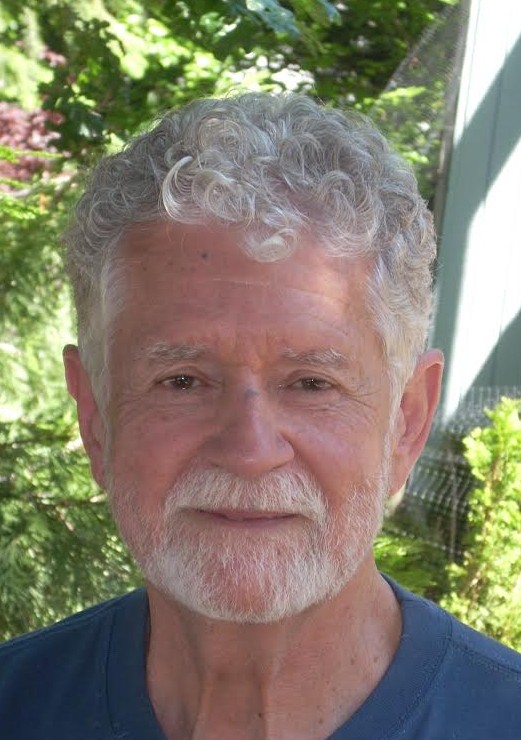
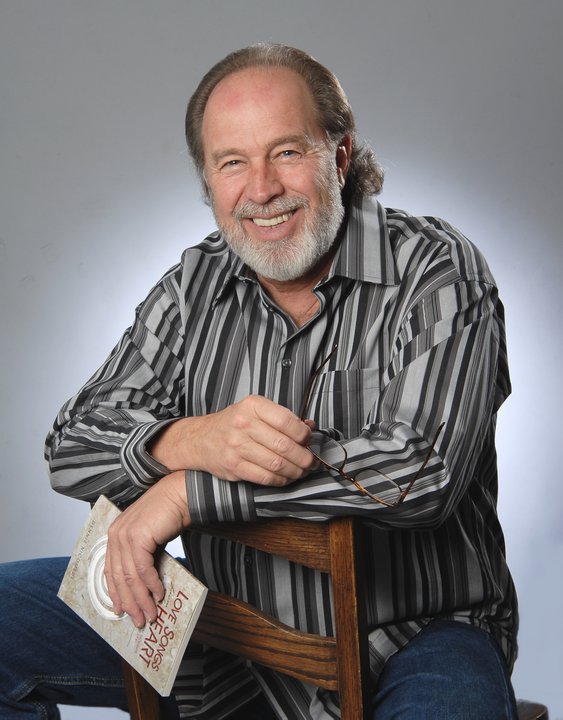
Greg Younger’s visionary play “Just Cause” was given a dramatic reading last month at the Ashland Playwrights Actors Atelier, a monthly workshop that allows local playwrights to hear their work. It was received by a delighted audience. Even though acting has been Younger’s primary career for decades, he considers himself first and foremost a playwright. We chatted on the terrace of the Nom Yen bubble tea house on Siskiyou Boulevard one sunny afternoon.

GY: I read recently that every playwright should have a group of people; that’s definitely the case, you need one. I’m very fortunate for the Atelier reading, although performance is a different animal altogether.

EH: Why are some of us passionate about theater?

GY: It’s the creative spirit. There’s very little banality in it; and it’s exciting. That’s why I’m there, to create, to get invested. I’m not putting on product. I’m putting on something that will move people in one way or another.

The Greeks understood that the stage was the window of the soul. To examine one’s humanity, and relationships, and what that’s all about, is one of the greatest reasons that we’re here. I find it the most grounding thing ever.

Theater allowed me to examine parts of myself I never would have been able to do in any other venue. I certainly couldn’t do it in any of the zillion jobs that I’ve had to support it. Going to the depths of your soul and screaming from there: Delight. There is just a joy that I feel when I’m present and alive on stage which is unequaled anywhere else. The same is why I write theater.

Theater is about spatial relationships. When you see the actors in person, there is a dynamic; the distance between them speaks. That is something that you cannot put on the page. So it takes a very astute reader of plays to know what a good play looks like, rather than a talking drama. I advise every single playwright to get on the stage and do a show.

Paramount is the play. The play is more than the script; it’s more than the actors; it’s more than the director; it’s all those together. It’s give-and-take. It’s very much a communal process. There’s a saying, “When you enter the rehearsal hall, leave your hat at the door.” It’s not about you. It’s about the play; it’s about what we’re creating. Leave everything behind.

EH: What makes a great actor?

GY: Versatility, openness, humility; the mind of a psychologist or a psychiatrist, somebody who is actually interested in the human condition, interested in other people, and curious.

For me, the ultimate actor is the Lawrence Olivier type, who stretches his boundaries, who can do anything.

The ability to witness: put awareness above and back of yourself. The ability to inhabit a world, inhabit it in front of other people and respect what that fourth wall is all about.

EH: The imaginary world?

GY: When you’re on stage, it’s not imaginary. It’s more real than this world is. It’s more profound, it’s deeper, certainly, and it smacks of poetry, the best kind of poetry. It’s not: “I’m just pretending on stage.” No way. Acting is being. What is essential for great acting is that you understand that: This is heightened reality. You’re in the thick of it, and it’s a beautiful thing. But it’s not pretending.

The Ashland Playwrights Actors Atelier brings together Rogue Valley writers and actors to read and analyze new plays. Readings take place the last Monday of each month. The next scheduled reading will be 6:30 p.m. Aug. 29 in the Gresham Room of the Ashland library with “The Angel Capone” by David Copelin. For more information, visit http://playwrightsatelier.org.
Jahnna Beecham and Malcolm Hillgartner

Jahnna Beecham
Jahnna Beecham
Malcolm Hillgartner
Malcolm Hillgartner

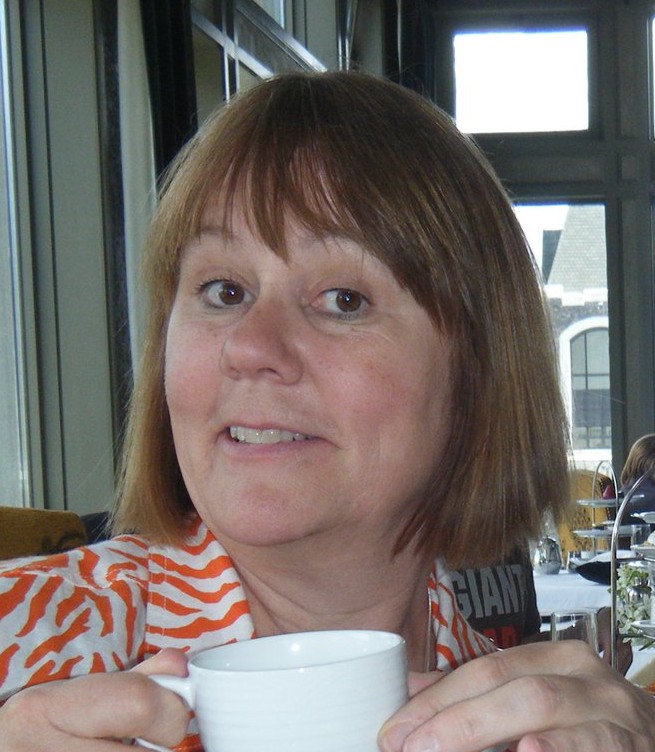
Jahnna Beecham and Malcolm Hillgartner are the masterminds behind the smartly conceived and composed “Holmes & Watson Save the Empire,” a musical mystery playing at Oregon Cabaret Theatre and directed by Michael Hume.

Beecham and Hillgartner are married with two children and have developed a successful writing partnership. We visited together in their charming and whimsically decorated Ashland home.

The couple met in the 1970s, when they were actors at the Oregon Shakespeare Festival.

JB: We acted a lot in regional theater, but continued to write wherever we went.

MH: We didn’t feel restricted, that we could only do theater, but we always felt that if you could find an opportunity you should take it. We learned early on that you have to have lots of balls in the air because as soon as you think that one thing is going to go, that’s when suddenly there’s a change in administration. And the new theater producer or editor is saying, “I’ve got my own friends I’d like to hire.” Then you have to network a new way.

This is the third show that OCT’s done of ours. The first show, “Chaps,” was a British radio show/cowboy musical. The second show, “They Came From Way Out There,” was written with Michael Hume.

Continue reading Jahnna Beecham and Malcolm Hillgartner

Carolyn Meyers and Dori Appel

Carolyn Meyers
Carolyn Meyers
Dori Appel
Dori Appel

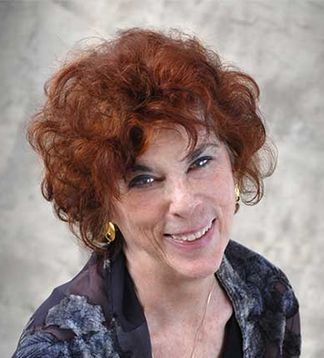
Mixed Company’s consummate comedians, Carolyn Meyers and Dori Appel, will celebrate their 28 years of theatrical partnership with “Saturn Return,” a reading of their selected works. In astrology, Saturn Return is a phenomenon that coincides with the time it takes Saturn to orbit around the sun. During this time goals are consolidated and people tend to gain a better vision of where their lives are going. Carolyn, Dori, and I chatted at the Bloomsbury coffeehouse one afternoon.

EH: Carolyn, you just came back from a Buddhist retreat. You’re also doing wild and crazy theater. How do the two coincide?

CM: Hopefully meditation makes everything better in your life. It helps you with the nature of your mind. It helps you to not get as caught up in your own neurotic processes. It frees you in that way. I think Buddhism and writing is the harder thing to balance because they take the same kind of space, the time you can focus on yourself and what your mind is creating. One reason that I haven’t been more of a writer is that I don’t take enough time to be alone. You have to be willing to spend a lot of time by yourself.

Dori has focused a lot more on play-writing. I focus a lot more on performance and production of original material. That’s where my major work has been. The work I do with Dori and “Mixed Company” is intricate and profound. People really love and remember our work because of our strong chemistry on stage and because of the depth of the writing.

EH: Is your work political in nature?

DA: I think that it is issue oriented. If that makes it political then to that degree it is. It has struck a lot of resonant chords. It’s an interesting question, political vs. social issues. One of our reviews said, “For women, a voyage of recognition, for men, a voyage of discovery.” That’s our feminist approach. But we expect our work to be universal and that men will like it.

CM: I was thinking about why we call our work “Mixed Company.”

DA: “Mixed Company” is from a phrase that used to be said in my household and many others, “That’s not suitable for mixed company.”

CM: It’s important to bring up women’s issues in mixed company. It’s important to us that a wide variety of people see the shows.

EH: Has your message changed over the years?

CM: In a good way some of our message has become outmoded, and that feels good. Of course we all feel scared that a more progressive agenda is not happening. In fact, I’m writing about some of the very things we never thought that we would have to write anything on again, like abortion. It terrifies me that this rollback is happening, but I think resilience sums up the characters in our work.

DA: That is why we can deal with issues, and we don’t bum anybody out, because there is resilience. It doesn’t mean that everything necessarily has a happy ending, but there is resurgence in playing the hand you’re dealt, of maybe switching those cards when nobody’s looking. Those kinds of tricks are necessary. If you always just read the hand, things might be rather grim. But there are times when you can count the chips, pack in the deck, and get a better one. Go fish!

Evalyn Hansen is a writer and director living in Ashland. She trained as an actor at the American Conservatory Theatre and is a founding member of San Francisco's Magic Theatre. Reach her at evalyn_robinson@yahoo.com.

Dori Appel

Dori Appel
Dori Appel

Playwright Dori Appel has published, produced and performed her original theatrical works for decades. Her plays have won international acclaim and numerous awards (including the Oregon Book Award in drama). Appel will perform in April at The Dance Space in Ashland. We met over coffee and scripts at The Coffee Place above Bloomsbury Books.

EH: What kinds of plays do you write?

DA: I tend to be a somewhat quirky playwright. I am often funny, but even with the humorous pieces, there’s often a serious undercurrent. I write comedies about serious things. I’d like it always to be a mix of those things. Any funny piece that I write has a human quality to it, where there are real people. I’m not really interested in farce. My work is character-driven. I like there to be people who deserve some sympathetic response. I’m interested in characters who have something that is important to them, that needs to be worked out.

Continue reading Dori Appel

Ruth Wire

Playwright Ruth Wire is a Member of the Board of the Directors of the Ashland Contemporary Theatre. Wire has written numerous plays and screenplays. Her latest full length play, “A Modern Woman” was produced by Oregon Stage Works. She also leads Haywire Writers’ Workshop in Ashland. We met at the Bellview Grange where she was making preparations for the theater to open the new comedy by David Hill, “Larry’s Best Friend”.

EH: What drives people to do theater?

RW: It’s an enhanced kind of living.  What the playwright has done is to distill experience into a two-hour or fifteen minute glob, so that it’s all very pure, and it’s all very dramatic. Whereas you can go for years and nothing happens to you, then something big happens like somebody dies or they’re divorced or whatever. But in a play, it happens in two hours. And what I like about it is, if it’s a good play, it leaves you wringing wet; your heart’s pounding and you’re with those characters. You cannot leave them, It’s impossible. You’ve gone through an experience and you’ve learned something.

Continue reading Ruth Wire

Bob Valine

Bob Valine
Bob Valine

“Hidden Agendas”, Oregon Stage Works Playwrights Unit’s next production, features “The Other Side” by veteran playwright Bob Valine. Bob met with early success, collecting numerous awards and fellowships. His play “Black Judas” was produced at the Mark Taper Forum in Los Angeles before he followed the “spiritual path”. Now, winding down a long career in teaching, Bob is seeing his plays produced again. Outside on a sunny day, we chatted about his evolution as a playwright.

BV: It’s become a passion, now. It’s something I really need to do. My early playwriting was instinctive, a lot of anger and revolution. Now it’s different. It’s exploring who we are and what we’re doing here, and exploring human emotions, my own and others.

Continue reading Bob Valine

Dennis Nicomede

Dennis Nicomede
Dennis Nicomede

“Lately I’ve been very busy,” said Dennis Nicomede who recently delivered stunning performances playing numerous characters in “Love’s Not Time’s Fool” at Rogue Community College. Dennis has just written the narration for “Spotlight on the Mills Brothers” at the Camelot Theatre, and is soon to portray John Smith in “Breaking the Code” at the Ashland Contemporary Theatre.  I visited Dennis and his wife, Jeanne, in their charming home in Talent.

EH: Tell me about “Breaking the Code.”

DN: It’s about Alan Turing, the mathematician that broke the German enigma code. That’s a play I’d refer to as a drama, something that has some real emotional value to it.

Continue reading Dennis Nicomede