


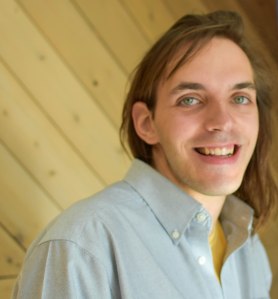
 Jeffrey Scudder, assistant professor of art at Southern Oregon University, creates dynamic presentations with exquisite imagery for his lectures and performances. An internationally known figure in the art world, Scudder holds a Master of Fine Arts in Sculpture from Yale University. He teaches in SOU’s Emerging Media and Digital Arts program, telling stories with pen and paper, while instantaneously capturing and creating post-expressionist images, with a host of newly developed computer software. We met at Case Coffee Roasters on Siskiyou Boulevard.
EH: Tell me about your productions.
JS: Since I come from computer art, I do a lot of performance without computers, a lot of drawing and telling stories. I transform things. I change from one image to another: A morphing image with a morphing story. Lately, I have been doing a lot of drawing with sound. Performing while drawing and talking simultaneously. These are modernist ideas of connecting drawing and sound.
Sometimes in order to understand what’s happening with computers or technology, you have to use a different medium to describe it. You want it to be in the background so that you can focus on the conversation.
People don’t usually think of computer art as something that requires a physical presence. I’m spearheading a movement to create more intimacy through computer art. I’m often drawing on paper, but I’m talking about video games. I am creating a form of intimacy by not actually playing the video game. Instead I’m talking about ideas using another medium.
When I perform, I like to create a setting, like a chamber music performance. I use a lot of candles, there’s music playing, sometimes snacks. I like the audience to feel that they are part of the action so that people feel at ease, so that they are ready to take in images and let things happen.
 Ginger Eckert is an assistant professor of theater at Southern Oregon University in the area of performance voice and speech. You may have appreciated her work with Oregon Center for the Arts productions of “Hedda Gabler” and “Angels in America Part Two: Perestroika.”
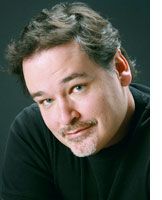 Sean O’Skea, professor of scenic design at Southern Oregon University, designed last spring’s brilliant production of “Angels in America: Millennium Approaches,” directed by Jim Edmondson. “Angels in America Part Two: Perestroika” will play Nov. 14-24 in SOU’s Main Stage Theatre. I met O’Skea in the lobby of the newly expanded Theatre Arts Building on the SOU campus.
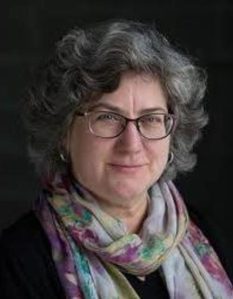 Deborah Rosenberg, professor in costume design at Southern Oregon University, is enjoying her 20th year as a faculty member of the SOU Theatre Program. Rosenberg acted in college and found herself in costume design, when she admitted to a director that she knew how to sew. I visited with Rosenberg in her office in the university’s newly expanded Theatre Building.
 Dr. Alexander Tutunov, Southern Oregon University’s Professor of Piano and Artist in Residence, is now preparing for his Tutunov Piano Series beginning Oct. 11. The Series features seven internationally acclaimed virtuoso pianists.
 JE: The scope of the play is huge. I assigned the cast to study subjects such as: Civil Rights; the House Un-American Activities Committee; Roy Cohen; the history of drag, and leather bars in America; the early medical and political response to the epidemic; Rock Hudson; the plagues of the 13th and 17th century. The Angel brought in charts of the structure of heaven. It’s been interesting to research the clothes of the early ’80s, and how strange they were.
 Jackie Apodaca, a professor of theater at Southern Oregon University, has co-written the book “Answers from ‘The Working Actor’” with actor Michael Kostroff (best known for his five seasons on HBO’s ”The Wire”). Taken from the actor’s trade paper “Backstage,” the book gives a fascinating picture of the complex and confusing world of the acting profession.
 Ashland Theatre