I'm a theater buff. I am passionate about theater. I see as many plays as I can as often as I can. I go to lectures, previews, prefaces, backstage tours, dramatic readings, dress rehearsals, post matinee discussions, talks in the park and an occasional cast party. If I'm not there, I would like to be. I have my BA in dramatic arts from UC Berkeley, my MA from San Francisco State and I'm currently studying directing at Southern Oregon University. I volunteer for the Oregon Shakespeare Festival, and recently I understudied a walk-on part in "Trip to Bountiful" at Oregon Stage Works.
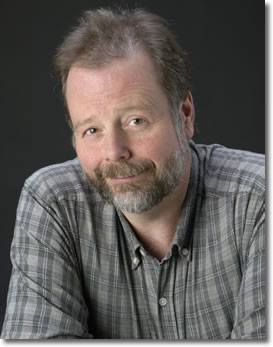
Paul Jones is directing “Crimes of the Heart,” the last production in Camelot Theatre’s current building. Within the last two years, Jones has played Nixon in Camelot’s “Frost Nixon,” Marley’s Ghost in Oregon Stage Works’ “The Christmas Carol,” and Lt. Col. Matthew Markinson in Camelot’s “A Few Good Men.” We chatted over coffee at The Coffee House at Bloomsbury Books.
EH: Why do you think “Crimes of the Heart” won a Pulitzer Prize?
PJ: The play doesn’t bring up any earth-shattering world issues, but it hits people in unexpected places. The appeal is very human, people handling their problems, which to them are monsters, nothing to do with earthquakes, or tsunamis, or the threat of the A-bomb.
It’s about three sisters struggling with making the wrong decisions, listening to their fears, being too logical, or just jumping into something without asking the heart, “Is this what I really want to do?” and then not listening. Those are the crimes.
It’s comical, desperate and pathetic. You find yourself being drawn in with the characters, the traumas that they’re dealing with, and living their lives. It is so well-written, it just plays itself; it flows so beautifully. It’s enormously funny, but underneath are all those layers of what is going on with those people. The audience will find themselves crying and laughing at the same time.
Mixed Company’s consummate comedians, Carolyn Meyers and Dori Appel, will celebrate their 28 years of theatrical partnership with “Saturn Return,” a reading of their selected works. In astrology, Saturn Return is a phenomenon that coincides with the time it takes Saturn to orbit around the sun. During this time goals are consolidated and people tend to gain a better vision of where their lives are going. Carolyn, Dori, and I chatted at the Bloomsbury coffeehouse one afternoon.
EH: Carolyn, you just came back from a Buddhist retreat. You’re also doing wild and crazy theater. How do the two coincide?
CM: Hopefully meditation makes everything better in your life. It helps you with the nature of your mind. It helps you to not get as caught up in your own neurotic processes. It frees you in that way. I think Buddhism and writing is the harder thing to balance because they take the same kind of space, the time you can focus on yourself and what your mind is creating. One reason that I haven’t been more of a writer is that I don’t take enough time to be alone. You have to be willing to spend a lot of time by yourself.
Dori has focused a lot more on play-writing. I focus a lot more on performance and production of original material. That’s where my major work has been. The work I do with Dori and “Mixed Company” is intricate and profound. People really love and remember our work because of our strong chemistry on stage and because of the depth of the writing.
EH: Is your work political in nature?
DA: I think that it is issue oriented. If that makes it political then to that degree it is. It has struck a lot of resonant chords. It’s an interesting question, political vs. social issues. One of our reviews said, “For women, a voyage of recognition, for men, a voyage of discovery.” That’s our feminist approach. But we expect our work to be universal and that men will like it.
CM: I was thinking about why we call our work “Mixed Company.”
DA: “Mixed Company” is from a phrase that used to be said in my household and many others, “That’s not suitable for mixed company.”
CM: It’s important to bring up women’s issues in mixed company. It’s important to us that a wide variety of people see the shows.
EH: Has your message changed over the years?
CM: In a good way some of our message has become outmoded, and that feels good. Of course we all feel scared that a more progressive agenda is not happening. In fact, I’m writing about some of the very things we never thought that we would have to write anything on again, like abortion. It terrifies me that this rollback is happening, but I think resilience sums up the characters in our work.
DA: That is why we can deal with issues, and we don’t bum anybody out, because there is resilience. It doesn’t mean that everything necessarily has a happy ending, but there is resurgence in playing the hand you’re dealt, of maybe switching those cards when nobody’s looking. Those kinds of tricks are necessary. If you always just read the hand, things might be rather grim. But there are times when you can count the chips, pack in the deck, and get a better one. Go fish!
Evalyn Hansen is a writer and director living in Ashland. She trained as an actor at the American Conservatory Theatre and is a founding member of San Francisco's Magic Theatre. Reach her at evalyn_robinson@yahoo.com.
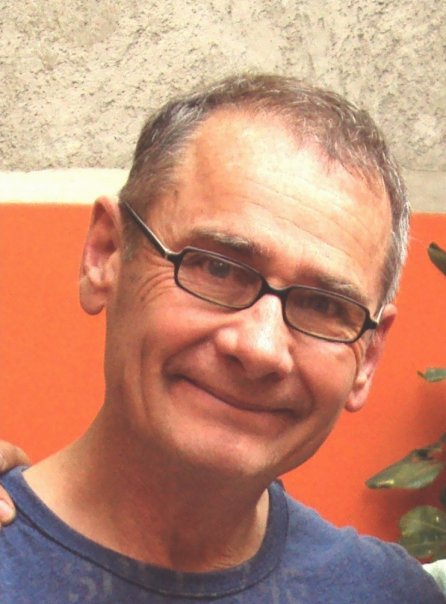
Oregon Cabaret Theater’s founding director, Craig Hudson, has been its resident scenic and lighting designer for the past 26 years. A former professor of theater arts at Southern Oregon University, Hudson divides his time between his design projects at OCT and the Red Tree House, a bed and breakfast he designed and built in Mexico City.
For those of you who haven’t visited OCT, it’s a gracious, polished, welcoming environment that serves up tasty dinner theater. Audiences are consistently satisfied, and so is the OCT staff, some of whom have been there since the theater’s inception. Hudson and I met for coffee at the Rogue Valley Roasting Co. on Ashland’s East Main Street.
CH: I’d always wanted to have a theater. When I was at grad school at Penn State, I was talking to friends who collected memorabilia from old Philadelphia theaters. I said, “Someday I want to have my own theater; if you ever see a big main chandelier for sale, let me know.” They knew of one. So I carted around this huge chandelier looking for a place to put it. That’s the chandelier in the Oregon Cabaret Theatre.
EH: How did you find this fantastic space?
CH: One day a friend said, “You have to come and look at this building.” Somebody had kicked in the back door of this old church. And I thought, my God, this would be a great theater.
EH: Do you have a favorite set that you’ve designed?
CH: We used to do a lot of dinner theater at SOU. We did a very good “Tom Jones.” People were eating in what was the auditorium. We’d put platforms over the seats. The ceiling was tented. We built a whole balcony. Actors could go down stage, up through the audience, up staircases, around, and back down on the stage. It was really fun. The food service was integrated into the show. The audience was brought into the space, and everything happened around them. It was one of those total experiences. It was magical, the minute you walked in.
This season, Oregon Shakespeare Festival’s Deb Dryden designed the costumes for “To Kill a Mockingbird” and “The Pirates of Penzance.”
After graduate school and several years as an OSF Guest Artist, Dryden became an OSF Resident Costume Designer in 1997. The superbly fitted, intricately constructed, richly textured, impeccably detailed, durable and weatherproof costumes (that seem to effortlessly appear on the OSF stages) are the products of the process that Dryden calls “builds.”
I visited the slim, soft-spoken Dryden at her studio, and we strolled through the OSF costume shop, which hosts a team of about seventy accomplished artists.
DD: We’re opening this week; simultaneously we are starting the builds for the outdoor summer shows plus “Julius Cesar.” We have eight shows in process. We are still finishing up some final notes from the first four shows.
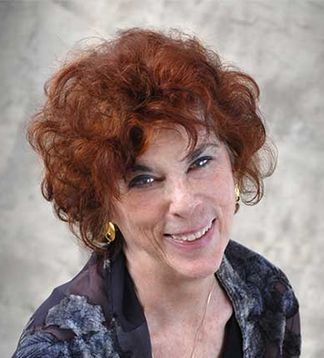
Playwright Dori Appel has published, produced and performed her original theatrical works for decades. Her plays have won international acclaim and numerous awards (including the Oregon Book Award in drama). Appel will perform in April at The Dance Space in Ashland. We met over coffee and scripts at The Coffee Place above Bloomsbury Books.
EH: What kinds of plays do you write?
DA: I tend to be a somewhat quirky playwright. I am often funny, but even with the humorous pieces, there’s often a serious undercurrent. I write comedies about serious things. I’d like it always to be a mix of those things. Any funny piece that I write has a human quality to it, where there are real people. I’m not really interested in farce. My work is character-driven. I like there to be people who deserve some sympathetic response. I’m interested in characters who have something that is important to them, that needs to be worked out.
“Alice Through the Looking Glass,” directed by Chris Sackett, opens Feb. 11 at Southern Oregon University’s Center Square Theatre. Tara Watkins plays Alice. Sackett, Watkins and I met in the SOU Theatre Arts Department one afternoon to discuss the production of the new adaptation by SOU alumnus Craig Jessen.
EH: Is “Alice Through the Looking Glass” done in modern times?
CS: It’s done in “dream time.” Lewis Carroll, Charles Dodgson (his real name), was writing during Victoria’s time. We have roughly moved up the time of our real world to Edwardian, but once we get through the Looking Glass, it’s dream time. It’s not specific to a given time.
EH: What do you have in store for us visually?
CS: In Looking Glass world, we go through a variety of environments. We’re in the small space, it’s intimate, and Looking Glass space is going all the way to the walls. A basic conceit of the story is, “Let’s pretend. Let’s expand our horizons.” We are going to be doing some experimental approaches to establishing environment.
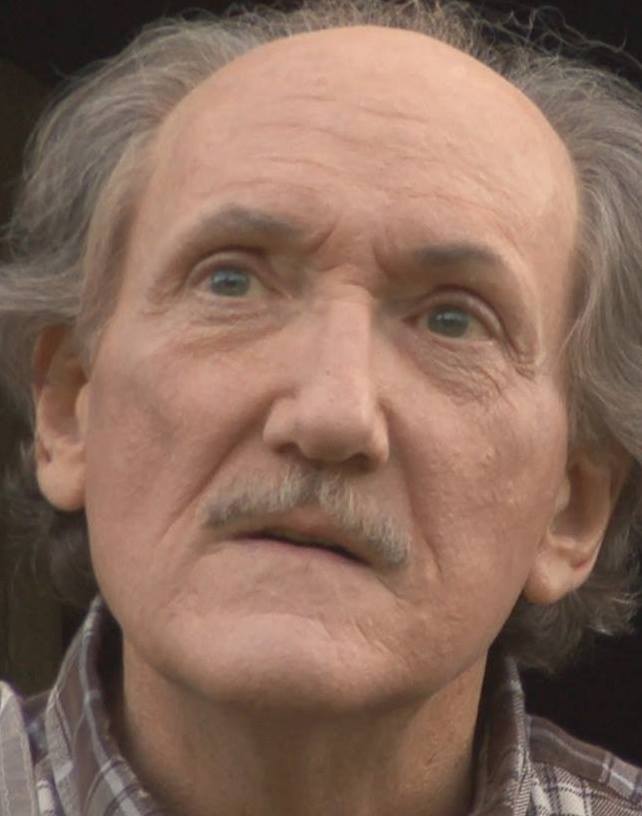
Ashland Contemporary Theatre’s production of “Breaking the Code” featured Bob Brazeau’s stunning portrayal of the brilliant mathematician Alan Turing. Brazeau’s performance revealed qualities of intelligence and wonder that are his very own. Brazeau began acting in 2002 in Ashland. As we met over lunch at Allyson’s Kitchen, he credited his Ashland mentors for his success.
EH: How old were you when you decided to pursue acting?
BB: I guess I was 47. I was in a couple of plays as a child in school, and I loved it. Back in ’01, I began taking lessons from Don Matthews. He taught me a lot. After about a year, I auditioned for Ruth Wire’s “A Modern Woman.” I had a blast. And now in one play after another, I’ve gotten to know a lot of people. Once I took that first role, it got me started, and I kept working at it, and just having a wonderful time.


 Ashland Theatre